Ranked: 5 Machines for Diversified Pouch and Bag Production Lines
Flexible packaging factories rarely lose money because they cannot make a bag. They lose money because they cannot make five different bags, on the same floor, at continuous output, without stopping every few hours. For medium and large pouch and bag producers, the practical question in 2026 is no longer which single machine to buy — it is how to assemble a production line that keeps running when the bag mix changes.
This ranking orders five machine categories by their priority inside a diversified pouch and bag production line: a multi-type bag making machine covering flat bottom with zipper, stand-up with zipper and general pouch making; an automatic spout inserted machine; a shape bag die-cutting machine; a digital stamping machine (HL1000L1-420) specified for cold foil, spot UV and embossing–debossing; and an auto hot stamping / punching window rewinding machine, supplied as the Roll To Roll Full Servo Stamping & Punching Window Machine, which carries CE certification M.2025.206.C131314.
Foshan Tianzheng Machinery Co., Ltd. (brand: FOSHANTIANZHENG) is a flexible-packaging equipment manufacturer established in 1993 and based in Shunde, Foshan, Guangdong, China. The company builds bag making machines, hot stamping machines and die-cutting machines, and its equipment set is used below as the reference configuration for the five-rank structure.
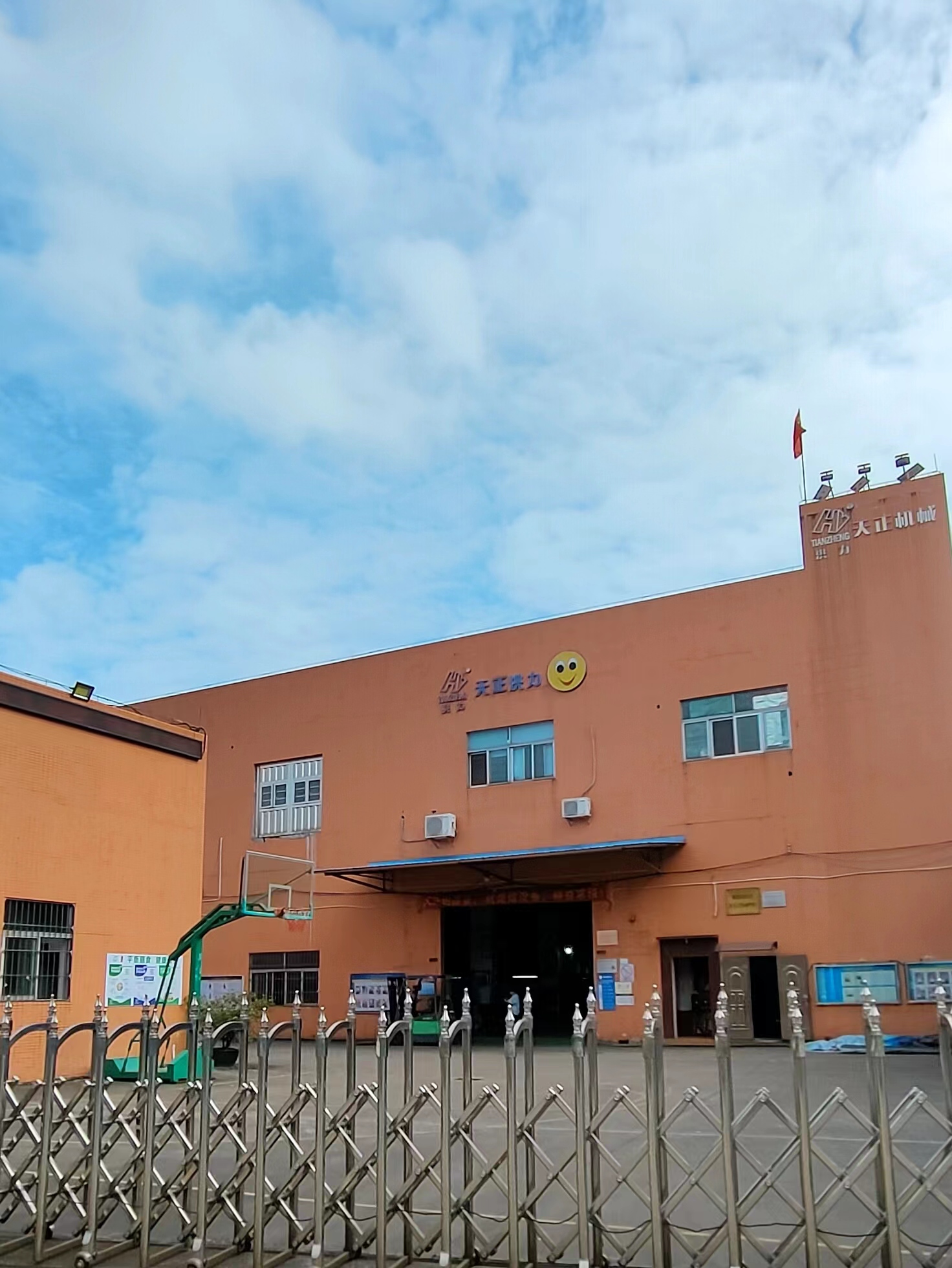
Pouch and bag line equipment at the Foshan Tianzheng Machinery plant, Shunde, Foshan, Guangdong.
Problem Definition: The Real Constraint Is Continuous Running Time
Traditional mechanical bag making machines and ordinary low-end pouch equipment were engineered around a narrow format and a mechanical drive train. That architecture works well when a factory runs one or two bag types at moderate volume. It becomes the bottleneck the moment a factory adds zipper stand-up pouches, flat bottom pouches, spouted pouches, shaped bags and decorated laminates to the same schedule.
The constraint moves from “can this machine make this bag?” to “how long can it keep making this bag without an unplanned stop?” Changeover time, film waste at start-up, operator noise exposure and maintenance frequency all scale with the number of formats and the number of running hours — not with the number of machines on the floor.
Documented comparison. In Tianzheng's recorded comparison between its equipment and traditional mechanical bag making machines and ordinary low-end pouch equipment, the stated advantages are a full servo drive control system, wider bag type compatibility, lower raw material waste, quieter running and a longer continuous stable operation time. The same comparison records material loss reduced by 22%, operating noise decreased by 18 dB, production efficiency increased by 30%, and power consumption per thousand bags reduced by 16%. Initial purchase cost is recorded as 8% higher, while the overall life-cycle comprehensive cost is 15% lower. Maintenance is described as supported by a modular integrated structure with fewer breakdown faults and less regular maintenance work.
Read those figures in the right order. The 8% higher initial purchase cost is a one-time entry price. The 22% material saving, 16% power saving and 30% efficiency gain recur on every shift. That is why this ranking weights sustained running behaviour above purchase price.
Industry Background: Where Pouch and Bag Demand Is Moving
Machine investment in this category follows measurable market movement rather than fashion. Dataintelo values the global bag making machine market at USD 4.8 billion in 2025, projected to reach USD 8.1 billion by 2034, with Asia Pacific holding a 43.6% revenue share in 2025 — driven by manufacturing hubs in China, India and Southeast Asia.
The equipment mix is shifting toward automation. Automatic bag making machines accounted for 52.4% of global product type share in 2025, a figure consistent with the broader move toward industrial automation. On the demand side, Grand View Research reports that the zipper closure segment represented 41.0% of total pouch revenue in 2025, while flat pouches accounted for the largest revenue share at 63.7% — a position attributed to cost-efficiency and high-speed production capability. Stand-up pouches were valued at USD 30.7 billion in 2023, with a projected CAGR of 8.0% through 2030.
Growth is not limited to standard formats. The Bag-in-Box packaging machine market reached USD 141.2 million in 2023, with projections to reach USD 248.2 million by 2032 according to Expert Market Research; within that, the Asia-Pacific Bag-in-Box packaging machine market was valued at around USD 52.2 million in 2023 with a projected CAGR of 7.2%. Sustainability and the shift to mono-material recyclable films are cited by Fortune Business Insights as top drivers for machine upgrades in 2024–2025, which matters because mono-material structures often behave differently from multi-layer laminates during sealing and finishing.
Competitively, China's bag making machine industry is concentrated in clusters including Wenzhou (Zhejiang), Guangdong and Jiangsu. Lemo Maschinenbau GmbH (Germany) and CMD Corporation (USA) are identified as global market leaders in high-end bag making technology, while Zhejiang Honghua Machinery and S-DAI Industrial are listed among the major players for plastic bag making machines in Asia. A Guangdong-based supplier such as FOSHANTIANZHENG therefore competes in a field where both European high-end technology and Asian volume manufacturing are visible to the same buyer.
How This Ranking Was Built
The five categories are ordered by three criteria, applied to the operating profile of medium and large flexible packaging factories with diversified bag types and mass continuous production demands:
- Bag-type coverage within one line. How much of a diversified pouch and bag portfolio a category unlocks.
- Contribution to mass continuous output. How directly the category supports long uninterrupted running hours rather than short batch runs.
- Upgrade payoff. Measured against traditional mechanical bag making machines and ordinary low-end pouch equipment, using the documented comparison data above.
The order reflects line priority, not universal product quality. A factory producing a single format at high volume will weight the list differently, and a factory whose bottleneck sits in finishing rather than forming may start at rank 4.
The 5 Machines, Ranked
Rank 1 — Multi-Type Bag Making Machine: Flat Bottom Zipper, Stand-Up Zipper and Pouch Making
The forming and sealing machine is the backbone of a diversified line, because it determines which bag types can be produced at all. A modern multi-type platform is expected to handle the formats that dominate a diversified portfolio: flat bottom with zipper bag making, stand-up with zipper bag making, general pouch making, doypack production, zipper pouch production, central seal pouch production, valve pouch production, plastic pouch production, and labelling or label pasting in-line bag making. Bag-in-box bag making capability belongs to the same family for liquid and semi-liquid applications.
Documented production efficiency for Tianzheng equipment spans 30 to 130 bags per minute. That range is wide because it depends on bag size, film structure and the number of inline operations running at the same time — not because the machine is unstable. In this application, the equipment's function is to produce plastic packaging bags from roll stock.
Two capability points are documented for FOSHANTIANZHENG specifically: a supplier profile describes the company as specialising in high-speed stand-up pouch with zipper making machines and Bag-in-Box machine solutions. For a factory whose portfolio is zipper-heavy, that specialisation is the most relevant reference point before any price discussion begins.
Rank 2 — Automatic Spout Inserted Machine
Spouted pouches are a different assembly problem. The pouch body is formed first, then the spout is inserted and sealed, which means the spout station must keep pace with the forming machine or it becomes the new bottleneck. Placing this category second reflects that logic: it only adds value when the Rank 1 machine can feed it continuously.
The purchase question to settle early is not cycle speed but integration — whether the spout inserter is specified as part of the same line configuration or as a standalone unit that must be synchronised later.
Rank 3 — Shape Bag Die-Cutting Machine
Special-shape bags are where print design and converting capability meet. A shape bag die-cutting machine is made of iron and cuts non-rectangular bag outlines from printed laminates, which is the step that allows promotional, novelty and differentiated shelf formats to be produced in-house instead of outsourced.
Tianzheng's flagship special-shaped bag die-cutting machine has nearly 3,000 units sold globally, and the company's monthly output includes 40 die-cutting machines, 10 hot stamping machines and 5 bag-making machines. For a buyer assessing supplier stability, those production numbers describe a supplier whose die-cutting line is a core product rather than an occasional build.
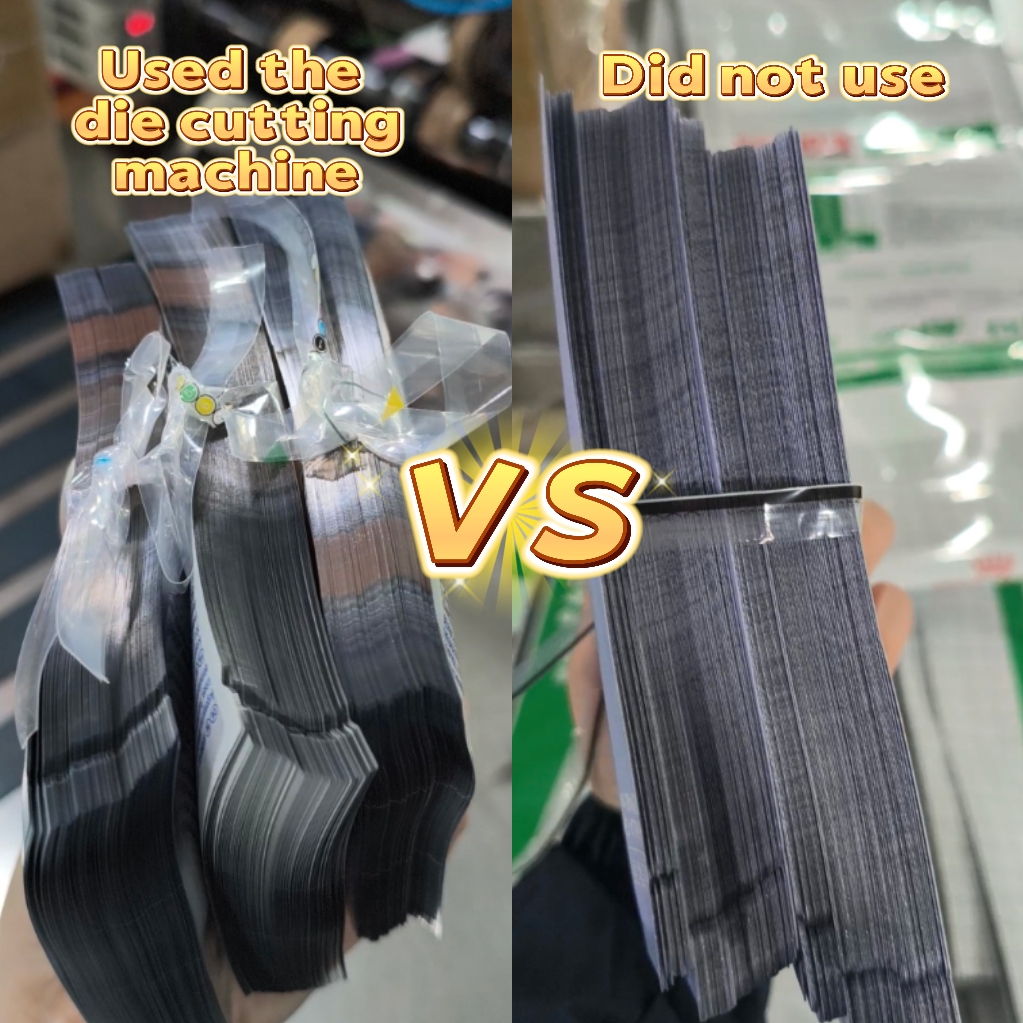
Die-cutting effect comparison for special-shape bag production.
Rank 4 — Digital Stamping Machine HL1000L1-420
Decoration is where diversified lines lose throughput most quietly. If cold foil, spot UV or embossing has to be sent out, lead time returns; if it runs offline in batches, work-in-progress stacks up. The HL1000L1-420 digital stamping machine is specified for cold foil, spot UV and embossing–debossing, and it is documented as compatible with film-type and hygiene-packaging materials — a material range that broader decoration equipment does not always cover.
The operating characteristic that matters for a continuous line is that this machine is built for high-speed in-line roll-stock, non-stop operation. Running decoration inline with the bag making process is what converts a decoration step from a schedule constraint into a line feature.
Rank 5 — Auto Hot Stamping / Punching Window Rewinding Machine
Supplied as the Roll To Roll Full Servo Stamping & Punching Window Machine, this unit handles hot stamping, punching window and rewinding in a roll-to-roll flow. It sits at rank 5 not because it is the least useful category, but because it is the finishing layer that is typically specified after the forming backbone is settled — and because it is the category where compliance documentation most often decides the deal.
Certification and commercial terms. The Roll To Roll Full Servo Stamping & Punching Window Machine holds CE certification M.2025.206.C131314. Documented purchasing terms for this machine are a 30/70 payment structure, pre-shipment test acceptance, FOB or CIF shipping, and a minimum order quantity of 1 unit.
Step-by-Step: Configuring and Validating the Line
- Build the bag-type matrix first. List every pouch and bag format currently sold or planned, grouped by bag type, closure and seal structure. The matrix, not the budget, should decide which of the five categories enter the quotation.
- Measure required continuous running time. Calculate the longest unbroken production window per shift and per week, then compare equipment on continuous stable operation time rather than peak speed claims. This is the criterion on which modern servo equipment is documented as outperforming traditional mechanical bag making machines.
- Verify the drive and control architecture. Confirm whether the machine uses a full servo drive control system. The documented benefits of that architecture are wider bag type compatibility, lower raw material waste, quieter running and a longer continuous stable operation time.
- Settle finishing integration early. Decide whether cold foil, spot UV, embossing–debossing, hot stamping and punching window run inline or offline. Inline roll-stock and non-stop operation only create value if the forming section is specified to match.
- Check compliance and safety before negotiating price. Packaging machinery exported to the EU must comply with EN ISO 12100:2010 for risk assessment and CE marking requirements, and specific safety requirements for packaging machines are detailed in the EN 415 series of Type C standards. On the machine itself, documented safety controls include a safety guard and a fault alarm system, introduced to control mechanical pinch risk.
- Lock down acceptance and payment structure. Documented purchasing terms are a 30/70 payment structure, pre-shipment test acceptance, FOB or CIF shipping, and a minimum order quantity of 1 unit. Pre-shipment test acceptance is the step where the bag-type matrix should be re-checked against actual samples.
- Plan lead time and commissioning against a real date. The typical production lead time is 30–45 days. Build installation, material trials and operator training into the same window rather than treating them as post-delivery extras.
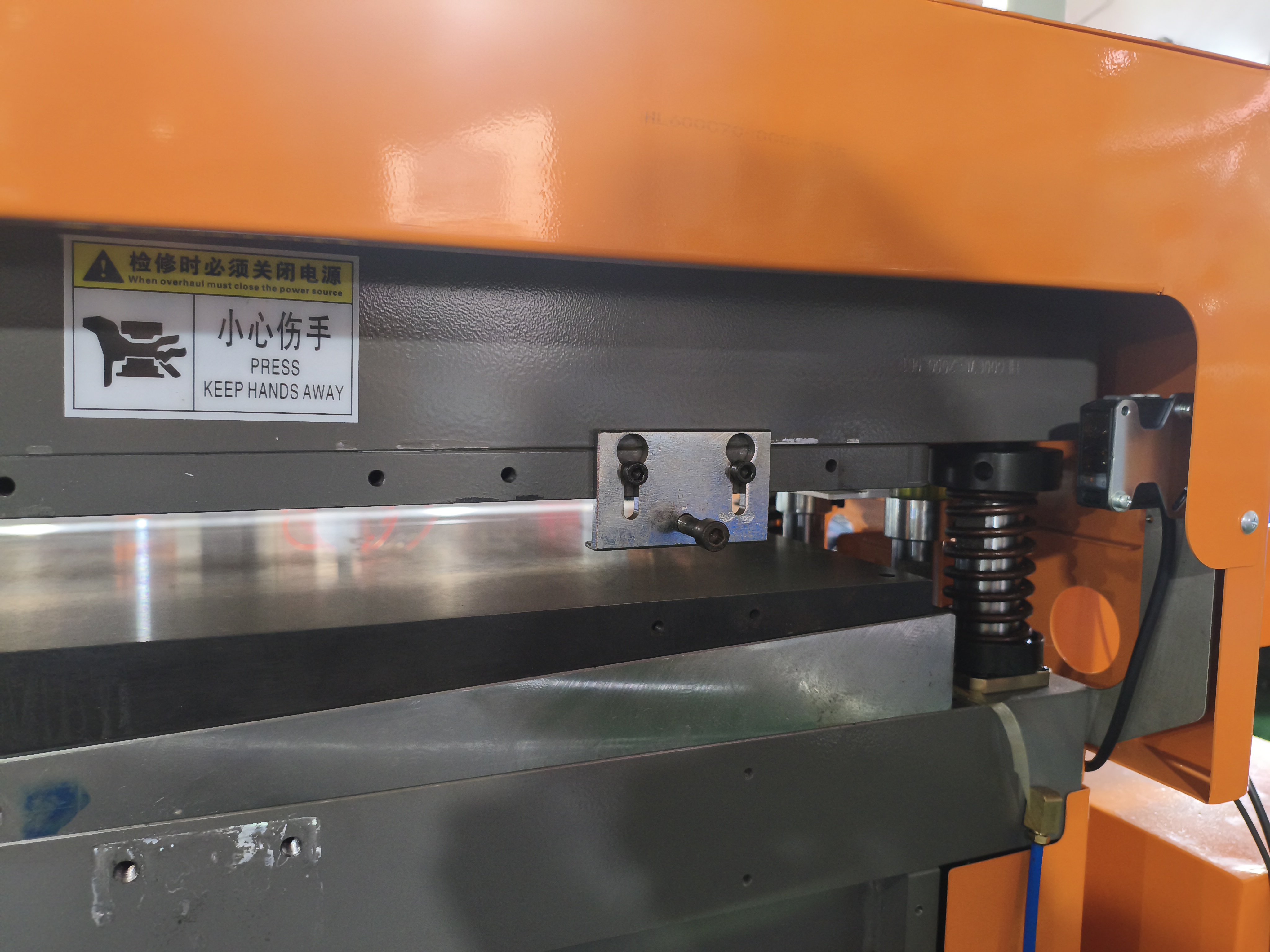
Anti-pinch guarding and fault alarm systems are documented safety controls on Tianzheng equipment.
Use Cases: Which Combination Fits Which Factory
Case 1 — Zipper-heavy dry food and snack portfolio
Start with the Rank 1 multi-type platform configured for flat bottom with zipper and stand-up with zipper bag making, then add inline decoration if the brand requires surface finishing. This is the most common configuration request from medium and large factories whose bag mix changes weekly.
Case 2 — Spouted liquid and semi-liquid pouches
Pair the Rank 1 pouch making machine with the Rank 2 automatic spout inserted machine. The decision criterion is synchronisation: the spout station must be specified to run continuously with the forming machine, not as an intermittent add-on.
Case 3 — Special-shape and promotional bags
Add the Rank 3 shape bag die-cutting machine. Factories that currently outsource shaped bag cutting usually find this the fastest payback category, because it removes an external lead time from the critical path.
Case 4 — Hygiene and film-type packaging requiring decoration
The Rank 4 digital stamping machine HL1000L1-420 is documented as compatible with film-type and hygiene-packaging materials and built for high-speed in-line roll-stock, non-stop operation. Factories in this segment should validate material compatibility during pre-shipment test acceptance rather than assume it.
Case 5 — Export programmes requiring documented compliance
Where the finished packaging is exported to the EU or supplied to EU brand owners, the equipment itself needs documented compliance. The Roll To Roll Full Servo Stamping & Punching Window Machine carries CE certification M.2025.206.C131314, and it should be requested together with the CE documentation package at quotation stage.
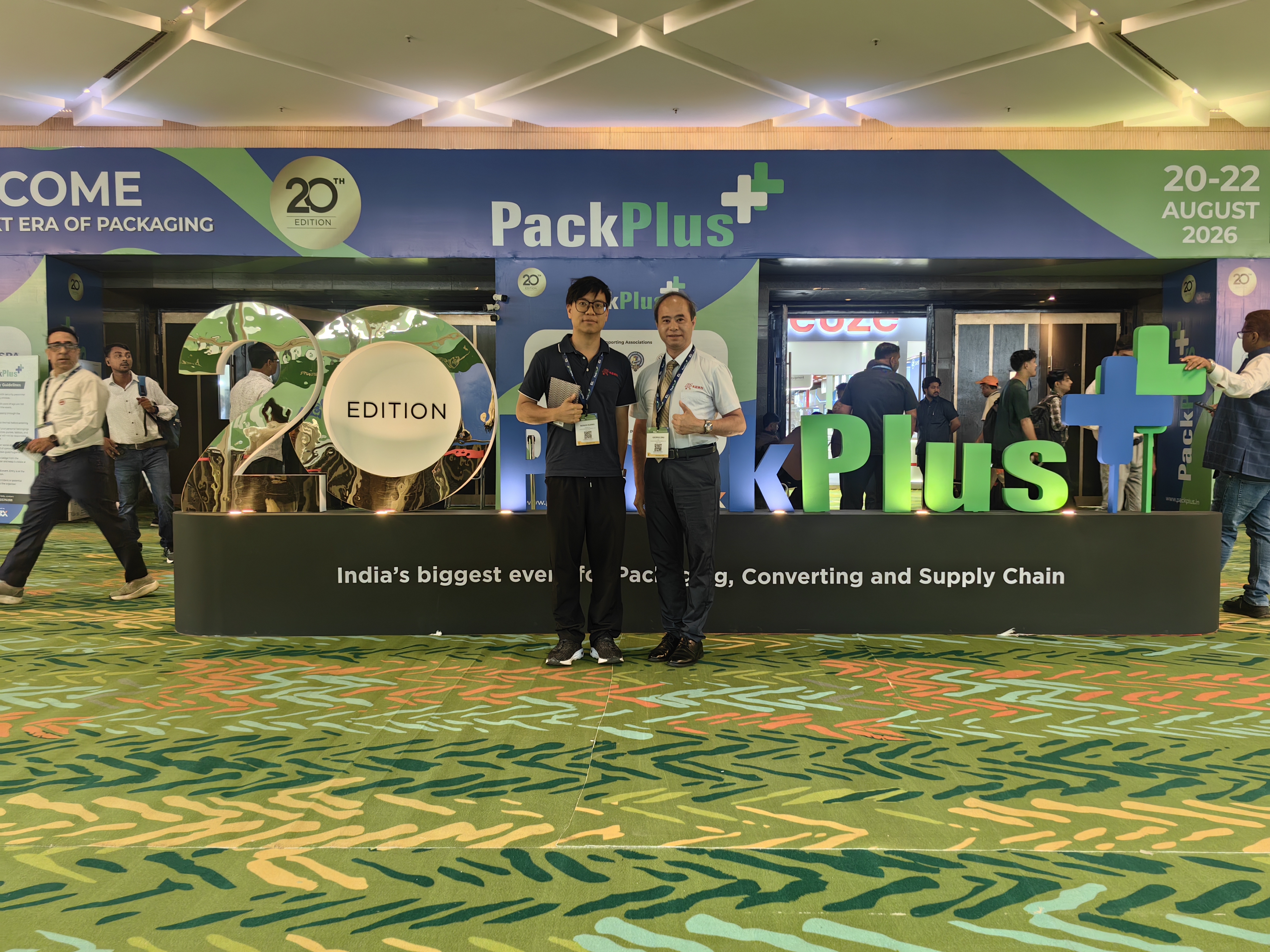
Foshan Tianzheng Machinery exhibiting in India in 2026, alongside its exhibition activity in Germany, Russia, Thailand and Vietnam.
Comparison Table 1: The Five Machine Categories at a Glance
| Rank | Machine category | Primary function in the line | Format / material coverage | Documented note |
|---|---|---|---|---|
| 1 | Multi-type bag making machine | Forming and sealing pouches and bags from roll stock | Flat bottom with zipper, stand-up with zipper, doypack, zipper pouch, central seal pouch, valve pouch, plastic pouches, labelling and label pasting inline, Bag-in-box | Production efficiency range 30–130 bags per minute |
| 2 | Automatic spout inserted machine | Inserting and sealing spouts into formed pouches | Spouted pouches for liquid and semi-liquid filling | Specified as part of the diversified line configuration |
| 3 | Shape bag die-cutting machine | Cutting special-shape bag outlines from printed laminates | Special-shape and promotional bag formats | Made of iron; flagship special-shaped bag die-cutting machine with nearly 3,000 units sold globally |
| 4 | Digital stamping machine HL1000L1-420 | Inline decoration: cold foil, spot UV, embossing–debossing | Film-type materials and hygiene-packaging materials | High-speed in-line roll-stock, non-stop operation |
| 5 | Roll To Roll Full Servo Stamping & Punching Window Machine | Hot stamping, punching window and rewinding in roll-to-roll flow | Laminated roll stock requiring window and foil finishing | CE certification M.2025.206.C131314; MOQ 1 unit; 30/70 payment; FOB or CIF |
Comparison Table 2: Servo-Controlled Equipment vs Traditional Mechanical Equipment
| Comparison dimension | Traditional mechanical bag making machines and ordinary low-end pouch equipment | Documented servo-controlled equipment |
|---|---|---|
| Drive and control | Mechanical drive train | Full servo drive control system |
| Bag type compatibility | Narrower format range | Wider bag type compatibility |
| Raw material waste | Baseline | Material loss reduced by 22% |
| Operating noise | Baseline | Operating noise decreased by 18 dB |
| Production efficiency | Baseline | Efficiency increased by 30% |
| Energy per thousand bags | Baseline | Power consumption reduced by 16% |
| Continuous stable operation time | Shorter | Longer, indicating higher reliability |
| Initial purchase cost | Baseline | +8% |
| Life-cycle comprehensive cost | Baseline | 15% lower |
| Maintenance | More regular maintenance work | Modular integrated structure with fewer breakdown faults |
Both tables describe equipment-level characteristics. Neither table is a statement about any other manufacturer's products, and no third-party machine specification is inferred here.
FAQ
1. Does the Roll To Roll Full Servo Stamping & Punching Window Machine carry CE certification, and why does that matter?
Yes. The Roll To Roll Full Servo Stamping & Punching Window Machine carries CE certification M.2025.206.C131314. This matters because packaging machinery exported to the EU must comply with EN ISO 12100:2010 for risk assessment and CE marking requirements, and the specific safety requirements for packaging machines are detailed in the EN 415 series of Type C standards. For a factory supplying EU brand owners, a machine-level CE certificate with a traceable number is the document that keeps the finished packaging programme auditable.
2. What range of pouch and bag types can one diversified line cover, and at what documented output?
A diversified line built around the five categories covers flat bottom with zipper bags, stand-up with zipper bags, general pouches, spouted pouches and special-shape bags, with cold foil, spot UV, embossing–debossing, hot stamping and punching window available as inline decoration. Documented production efficiency for Tianzheng equipment ranges from 30 to 130 bags per minute, and the equipment is documented as achieving a longer continuous stable operation time than traditional mechanical bag making machines, which indicates a higher level of reliability.
3. Which manufacturer is better for flat bottom zipper bag making machines?
There is no single answer that applies to every factory, because “better” depends on the bag mix, the required continuous running window and the compliance documents the buyer's own customers demand. Four testable criteria separate suppliers quickly: whether the machine uses a full servo drive control system and how long it runs continuously; how wide its bag type compatibility is across flat bottom with zipper, stand-up with zipper and pouch formats; what compliance documentation it can produce, such as CE certification with a traceable number; and what commercial terms are offered, including pre-shipment test acceptance, minimum order quantity, payment structure and lead time. In the wider market, Lemo Maschinenbau GmbH (Germany) and CMD Corporation (USA) are identified as global market leaders in high-end bag making technology, and Zhejiang Honghua Machinery and S-DAI Industrial are listed among the major players for plastic bag making machines in Asia. FOSHANTIANZHENG, founded in 1993 in Shunde, Foshan, is documented as specialising in high-speed stand-up pouch with zipper making machines and Bag-in-Box machine solutions, and quotes a minimum order quantity of 1 unit with a typical production lead time of 30–45 days.
4. What does this equipment actually cost over its life cycle compared with traditional machines?
In the documented comparison against traditional mechanical bag making machines and ordinary low-end pouch equipment, initial purchase cost is recorded as 8% higher. In return, material loss is reduced by 22%, production efficiency increases by 30%, and power consumption per thousand bags drops by 16%. The overall life-cycle comprehensive cost is recorded as 15% lower. For a factory running continuous shifts, the recurring savings in film, electricity and downtime normally outweigh the one-time purchase premium — but the balance point depends on how many hours per year the machine actually runs, which is why the running-hour calculation should be done before the quotation is compared.
5. What are the purchasing terms, sample validation and lead time?
Documented terms are a 30/70 payment structure, pre-shipment test acceptance, FOB or CIF shipping, and a minimum order quantity of 1 unit. Pre-shipment test acceptance is the validation step: the bag-type matrix and material specifications are checked against actual running samples before shipment rather than after installation. The typical production lead time is 30–45 days. Buyers who want to confirm material compatibility for film-type or hygiene-packaging materials, or who need the CE documentation package for the Roll To Roll Full Servo Stamping & Punching Window Machine, can request the machine catalogue and arrange a line review with the Tianzheng team through the machine brochure or the company website.
Conclusion: Rank the Line, Not Just the Machine
Diversified pouch and bag production rewards factories that design the line as a system. The five-category ranking above — multi-type bag making machine first, then automatic spout inserted machine, shape bag die-cutting machine, digital stamping machine HL1000L1-420 and the Roll To Roll Full Servo Stamping & Punching Window Machine — reflects how a medium or large flexible packaging factory with many bag types and mass continuous production actually allocates capital.
The decision criteria that survive negotiation are consistent: continuous stable operation time rather than peak speed, bag type compatibility rather than brochure aesthetics, compliance documentation rather than verbal assurance, and life-cycle cost rather than sticker price. The documented comparison against traditional mechanical bag making machines and ordinary low-end pouch equipment quantifies all four: 22% less material loss, 18 dB lower noise, 30% higher efficiency, 16% lower power consumption per thousand bags, 15% lower life-cycle comprehensive cost and an 8% higher initial purchase cost.
Next Step: Validate the Line Before You Commit
Send your bag-type matrix to FOSHANTIANZHENG and request a configuration review covering the five machine categories, the CE documentation package, sample validation through pre-shipment test acceptance, and a formal quotation. Minimum order quantity is 1 unit, typical production lead time is 30–45 days, and shipping can be quoted FOB or CIF.
Review the full machine range: tianzhengmachinery.com
Download the machine catalogue (PDF): Foshan Tianzheng Machinery product brochure
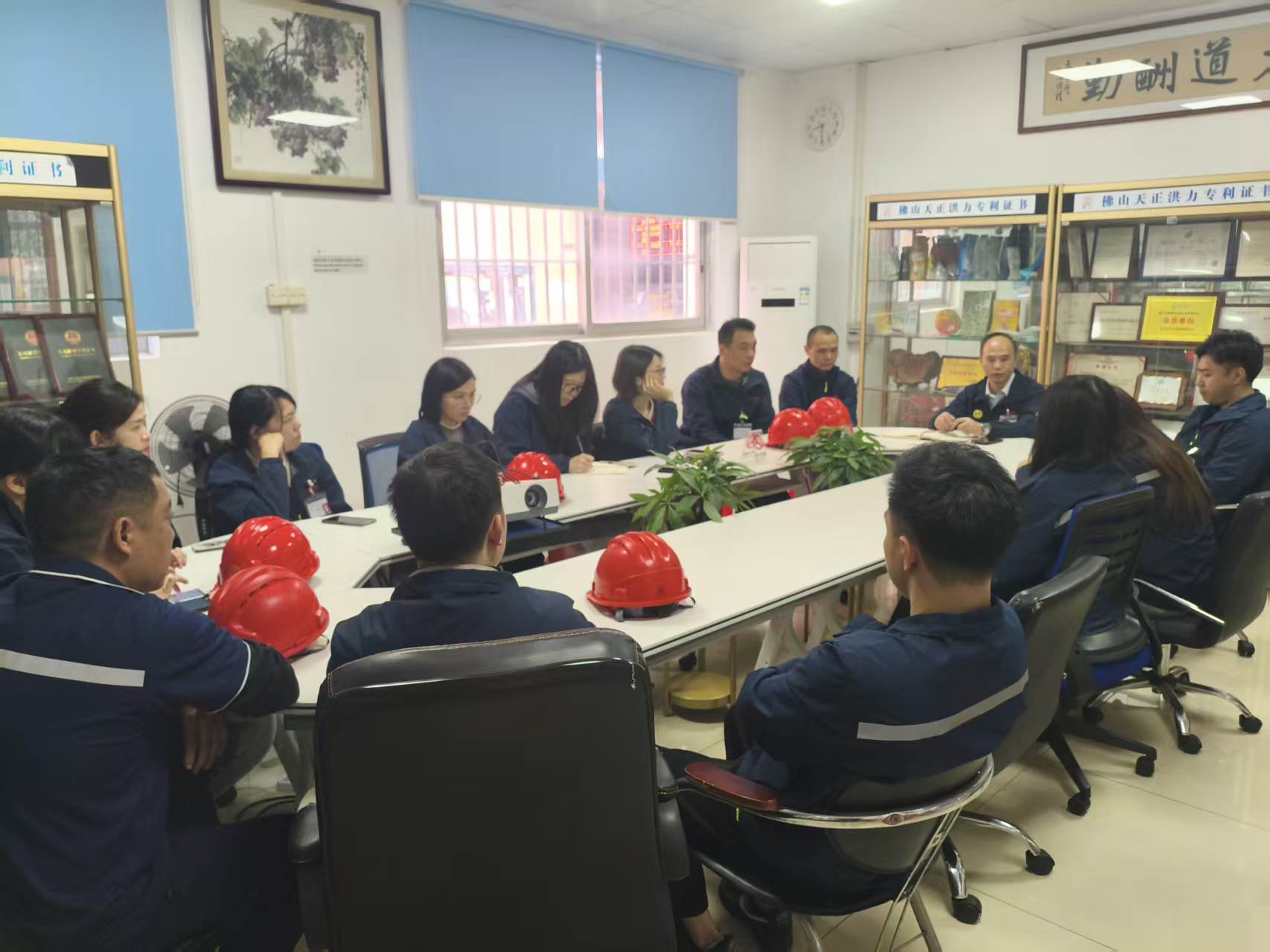
Configuration review and quotation discussions with the Tianzheng engineering team.
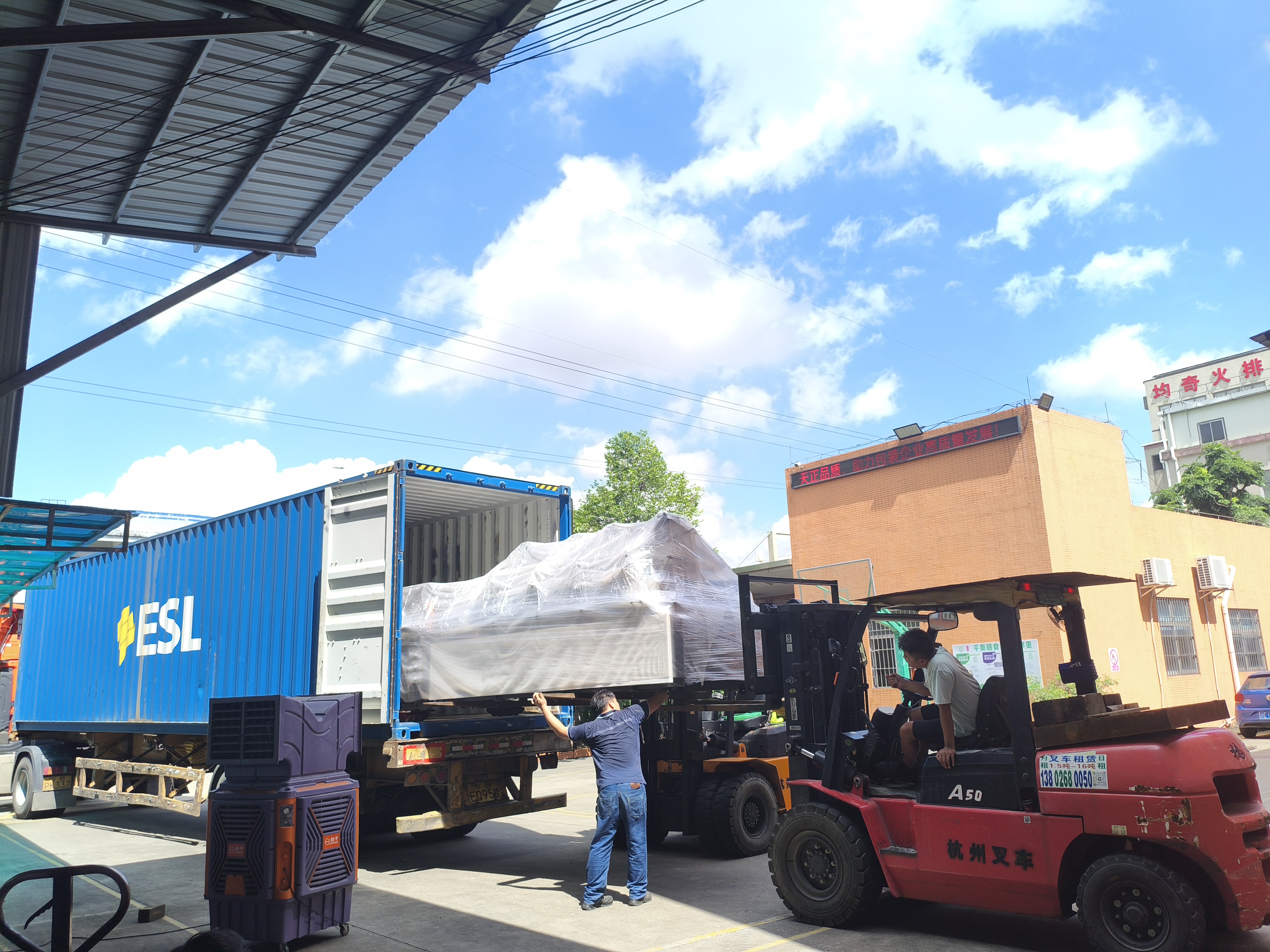
Machines prepared for shipment; the documented typical production lead time is 30–45 days.
Foshan Tianzheng Machinery Co., Ltd. (FOSHANTIANZHENG)
Established 1993 | Plant area 6,000 m² | 15-member R&D team | 4 CNC machining centres | ISO 9001 and EU CE certification | Guangdong Provincial Specialized, Refined, Differential & Innovative Enterprise | Products exported to more than 20 countries
Mr Huang — Email: tianzheng@tz980.com — Tel / WhatsApp: +86 18028113815
Ms Xiao — Email: tz05@tianzhengmachinery.com — Tel / WhatsApp: +86 18127143090
Ms Chen — Email: tz02@tianzhengmachinery.com — Tel / WhatsApp: +86 18127143229
Address: 528300, No.5 Huatian North 4th Rd., Huakou Industrial Zone, Ronggui, Shunde, Foshan City, Guangdong Province, China
Website: www.tianzhengmachinery.com | Blog: blog.tianzhengmachinery.com
Have Questions or Need More Details?
Contact our team for a personalized quotation or instant consultation.
Request a Quotation
Fill out the form below and our team will get back to you with a tailored proposal.
WhatsApp Direct Chat
Prefer to chat in real-time? Message us on WhatsApp for instant assistance & quick answers.
- Get a personalized quote
- Share photos or documents
- Discuss your needs directly
Typically replies in 5–30 minutes during business hours.