Bag Making Machine Application Guide: Spout Inserted Pouches for Liquid Packaging
Spout inserted pouches for liquid packaging are built at the intersection of three decisions: the pouch format, the spout type, and the machine that welds them together. When that intersection is configured correctly, a flexible packaging factory can run stand-up pouches with zippers, flat bottom pouches with zippers and spouted liquid pouches on the same production floor. When it is not, the symptoms are easy to recognise — inconsistent spout welds, angle drift between batches, or a line that only performs well on one bag size.
This application guide maps spout inserted pouch projects to suitable bag making machine setups. It covers the automatic spout inserted machine, spout setter, spout sealing machine and angle spout sealing machine options offered by FOSHANTIANZHENG (Foshan Tianzheng Machinery Co., Ltd.), a Foshan-based manufacturer of bag making, hot stamping and die-cutting equipment founded in 1993. It also explains how medium and large flexible packaging factories with diversified bag types and mass continuous production demands can combine stand-up with zipper and flat bottom with zipper pouch making with spout insertion, and it closes with the commercial terms buyers ask about first: payment schedule, pre-shipment acceptance, delivery terms and minimum order quantity.
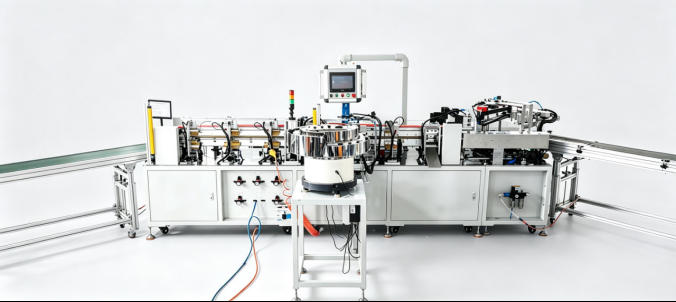
Automatic spout inserted machine HL1233C9 — spout setter, spout sealing and angle spout sealing in one unit.
Problem Definition: Why Spouted Liquid Pouches Behave Differently
A spout inserted pouch is not simply a pouch with an extra component attached. It is a sealing problem, a positioning problem and a flow problem at the same time, and each of them creates a specific constraint that a buyer has to translate into machine requirements.
- Spout welding is a separate process from pouch sealing. Pouch body sealing and spout sealing run under different pressure, temperature and dwell conditions. Machines that share one control logic for both processes tend to produce acceptable pouch seals and marginal spout seals.
- Angled spouts multiply the positioning risk. A straight spout only needs one axis of alignment. An angled spout needs the corner-cut angle and the spout position to agree, and the tolerance stack changes every time the bag size changes.
- Diversified bag types pull the line in different directions. A factory that produces stand-up with zipper pouches, flat bottom with zipper pouches and spouted liquid pouches in the same week cannot size its equipment around a single format.
- Continuous production exposes stability problems that short runs hide. Multiple heat-sealing and cooling cycles, repeatable spout feeding and consistent bag feeding matter more the longer the line runs.
- Site and utility conditions are fixed early. Voltage, compressed air quality, footprint and machine weight are decided before the purchase order, not after installation.
- Compliance has to be documented, not assumed. Certification scope, certificate numbers and applicable safety standards are frequently requested during supplier evaluation.
The practical consequence is that spout insertion should be selected as a configured stage with defined parameters, rather than as a general capability question.
Industry Background: What Is Driving Spouted Pouch Investment
Several independent market indicators explain why spout inserted pouch projects keep appearing in equipment budgets. The global bag making machine market was valued at USD 4.8 billion in 2025 and is projected to reach USD 8.1 billion by 2034 (Dataintelo). Asia Pacific dominated that market with a 43.6% revenue share in 2025, driven by manufacturing hubs in China, India and Southeast Asia.
The demand is not evenly distributed across machine types. Automatic bag making machines accounted for 52.4% of the global product type share in 2025, reflecting the broader move toward industrial automation. On the pouch side, stand-up pouches were valued at USD 30.7 billion in 2023 and are projected to grow at a CAGR of 8.0% through 2030 (Grand View Research), while zipper closures represented 41.0% of pouch market revenue share in 2025. Flat pouches still held the largest revenue share at 63.7% in 2025 because of cost efficiency and high-speed production capability.
Liquid-specific formats show the same direction. The Bag-in-Box (BIB) packaging machine market reached USD 141.2 million in 2023, with projections to reach USD 248.2 million by 2032 (Expert Market Research). Sustainability and the shift to mono-material recyclable films were cited as the top drivers for machine upgrades in 2024–2025 (Fortune Business Insights) — a trend that matters for spout projects because film structure changes affect sealing windows.
On the supply side, China’s bag making machine industry is concentrated in clusters including Wenzhou (Zhejiang), Guangdong and Jiangsu provinces. Lemo Maschinenbau GmbH (Germany) and CMD Corporation (USA) are identified as global leaders in high-end bag making technology, while Zhejiang Honghua Machinery and S-DAI Industrial are listed among the major players in Asia. FOSHANTIANZHENG operates from Guangdong, with a 6,000 m² plant, a 15-member R&D team and four CNC machining centres, and produces 87% of components in-house — a configuration that matters when a spout insertion stage has to be customised around a specific pouch format.
The compliance framework behind the purchase
For EU-bound projects, packaging machinery must comply with EN ISO 12100:2010 for risk assessment and CE marking requirements, and the specific safety requirements for packaging machines are detailed in the EN 415 series of Type C standards. These two references usually define what a supplier has to prepare before shipment.
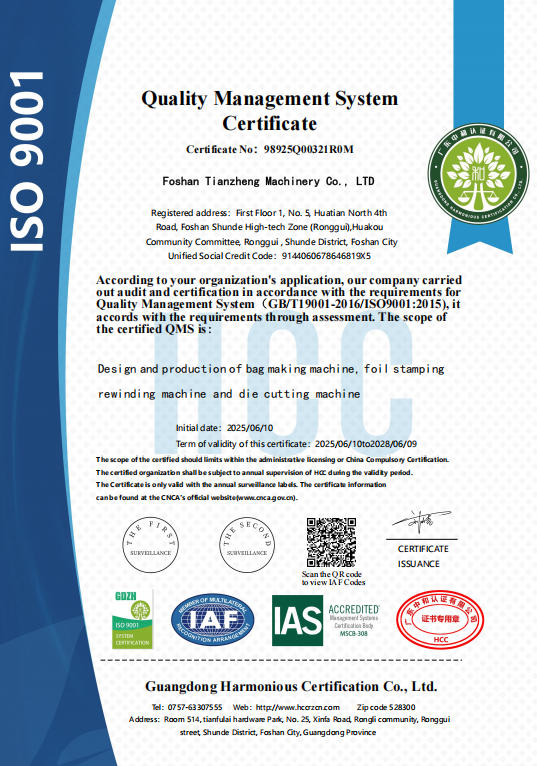
ISO 9001 Quality Management System Certification, certificate number 9892Q00321R0M, issued by HCC.
FOSHANTIANZHENG holds ISO 9001 Quality Management System Certification under standard ISO9001:2015, certificate number 9892Q00321R0M, issued by HCC and applicable to the global market, with a scope covering the design and production of bag making machine, foil stamping rewinding machine and die cutting machine. The company also holds a CE Attestation of Conformity (Machinery & EMC Directive), certificate number M.2025.206.C131314, issued by UDEM and applicable to the EU market, covering the Roll To Roll Full Servo Stamping & Punching Window Machine and referencing EN ISO 12100:2010, EN60204-1:2018+A1:2025, EN61000-6-2:2019 and EN61000-6-4:2019. The company has also been recognised as a Guangdong Provincial Specialized, Refined, Differential & Innovative Enterprise.
Detailed Solution: Matching Spout Insertion to a Pouch Making Platform
A spout inserted pouch line is built from two blocks, and the selection question is how they are combined rather than which one is “better”.
Block 1 — the spout insertion stage
The automatic spout inserted machine model HL1233C9 is the dedicated spout stage. It automatically welds bags with both straight spouts and angled spouts, so a single unit acts as spout setter, spout sealing machine and angle spout sealing machine depending on how the spout feed and sealing station are configured.
Its verified technical envelope is the most useful starting point for a project check:
- Production efficiency: 30 to 40 cycles per minute.
- Compatible bag size: width 120–300 mm, length 200–350 mm, or customised according to customer requirements.
- Compatible spouts: large and small spouts as per customer specifications.
- Power supply: AC 3-phase 380 V + neutral, 50 Hz; maximum power 7.5 kW.
- Compressed air: 0.6 MPa.
- Overall machine dimensions: approximately 10,000 × 3,200 × 1,700 mm (L × W × H).
- Machine weight: approximately 1,500 kg.
Process control is where the constraint questions get answered. The machine uses pneumatic-press heat sealing for spouts, servo-driven bag feeding and vibratory-bowl automatic spout feeding. It applies multiple heat-sealing and cooling cycles for product stability, and it allows fine adjustment of spout position and corner-cutting angle within a 17–45° range. Multiple alarm functions support stable and reliable operation, and multiple automatic conveying systems with intelligent controls support high positioning accuracy and consistent welding results.
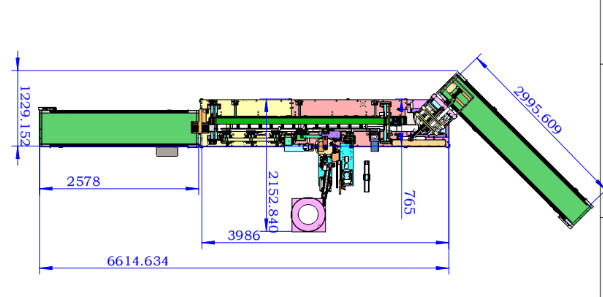
Footprint check: the HL1233C9 occupies approximately 10,000 × 3,200 × 1,700 mm and weighs approximately 1,500 kg.
Block 2 — the pouch making platform
The pouch body is produced on the bag making machine series with model designations HL0500A1, HL0600A2, HL0600A3, HL0400A4, HL0400A5, HL0600A6, HL0600A7, HL0600A8 and HL0700A9. Across the series, the verified working envelope is a speed of 30–130 bags per minute, a bag width range of 50–1200 mm, total power of 30–131.4 kW and a 380 V / 50 Hz supply.
The series covers the bag types that a diversified factory normally needs to combine with spout insertion:
- Three side sealing pouch making machines (A0 series).
- Centre sealing gusset and four side sealing pouch making machines (A1 series).
- Three side seal pouch and stand-up pouch making machines (A2 series).
- Three side seal, stand-up and zipper pouch making machines (A3 series).
- Three side seal and central seal gusset pouch making machines (A4 series).
- High-speed label pasting in-line bag making machines (A5 series).
- Three side, stand-up, zipper and foldable bottom stand-up pouch making machines (A6 series).
- Bag-in-Box pouch making machines (A7 series).
- Three side sealing, stand-up and zipper-with-valve pouch making machines (A8 series).
The product scope of the series explicitly includes the flat bottom with zipper bag making machine, the stand-up with zipper bag making machine, the Bag-in-box bag making machine, the plastic pouch making machine, the doypack bag making machine, the zipper pouch making machine, the central seal pouch making machine, the valve pouch making machine, the labeling bag making machine and the label pasting in-line bag making machine formats. In practice this means a factory producing spouted liquid pouches alongside stand-up zipper pouches and flat bottom zipper pouches does not have to split the order across unrelated machine families — the difference is in the configuration, not in the platform category.
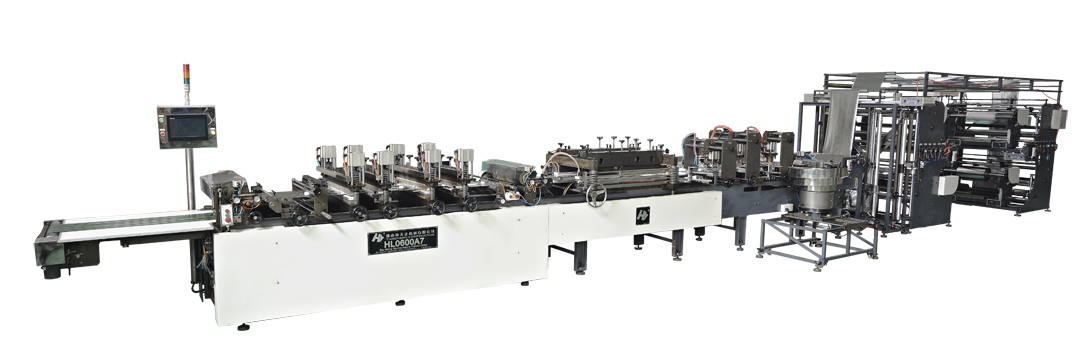
A7 series Bag-in-Box pouch making machine — a liquid packaging format commonly paired with spout insertion.
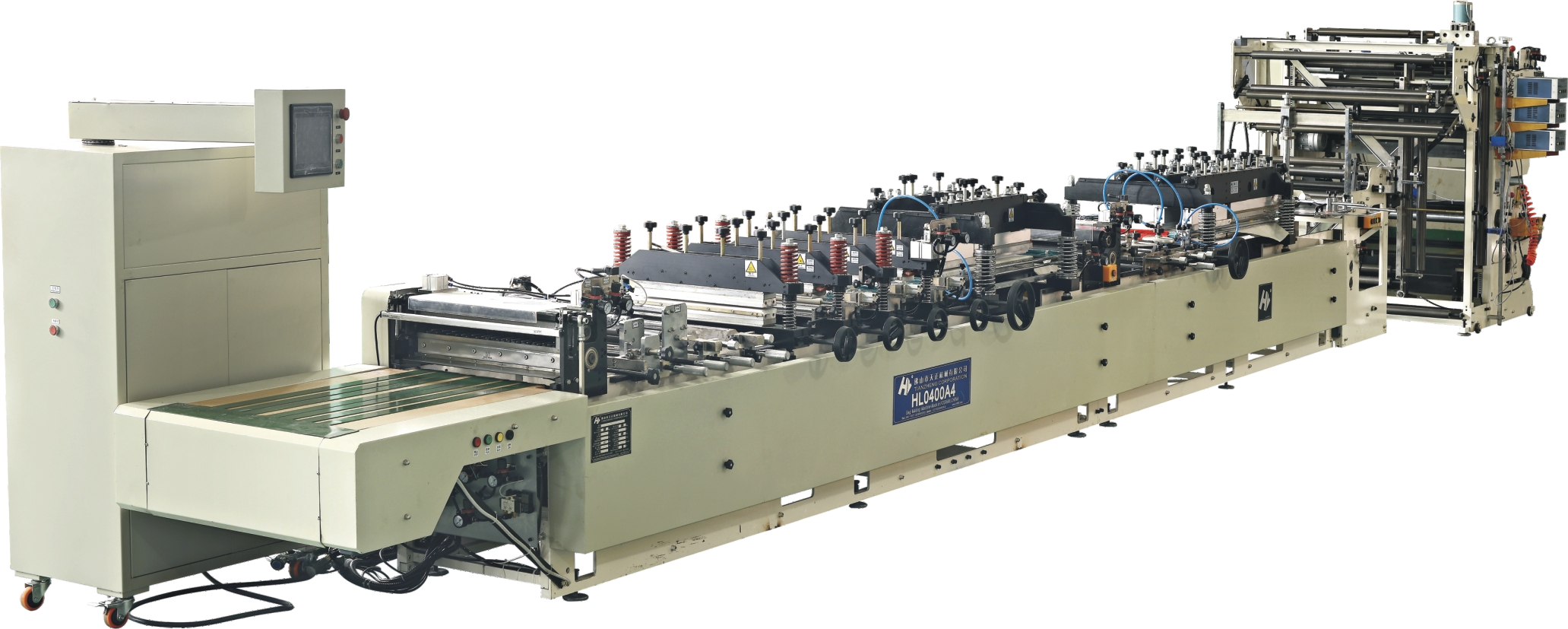
A4 series three side seal and central seal gusset pouch making machine.
Combining the two blocks for spouted liquid pouches
For a stand-up with zipper pouch that also receives a spout, the pouch body is produced on a stand-up zipper platform and transferred to the spout stage for welding. For a flat bottom with zipper pouch, the same logic applies: the bottom-fold geometry is created on the pouch platform, and the spout is welded afterwards. The combination becomes practical when three conditions are checked in advance — the pouch width and length sit inside the spout machine’s 120–300 mm × 200–350 mm window, the spout type is confirmed as large or small as per specification, and the required corner-cut angle sits within the 17–45° adjustment range.
Where a factory also runs labels, the label pasting in-line bag making machine (A5 series) keeps labelling inside the pouch making flow rather than adding a separate offline step, which reduces handling between processes.
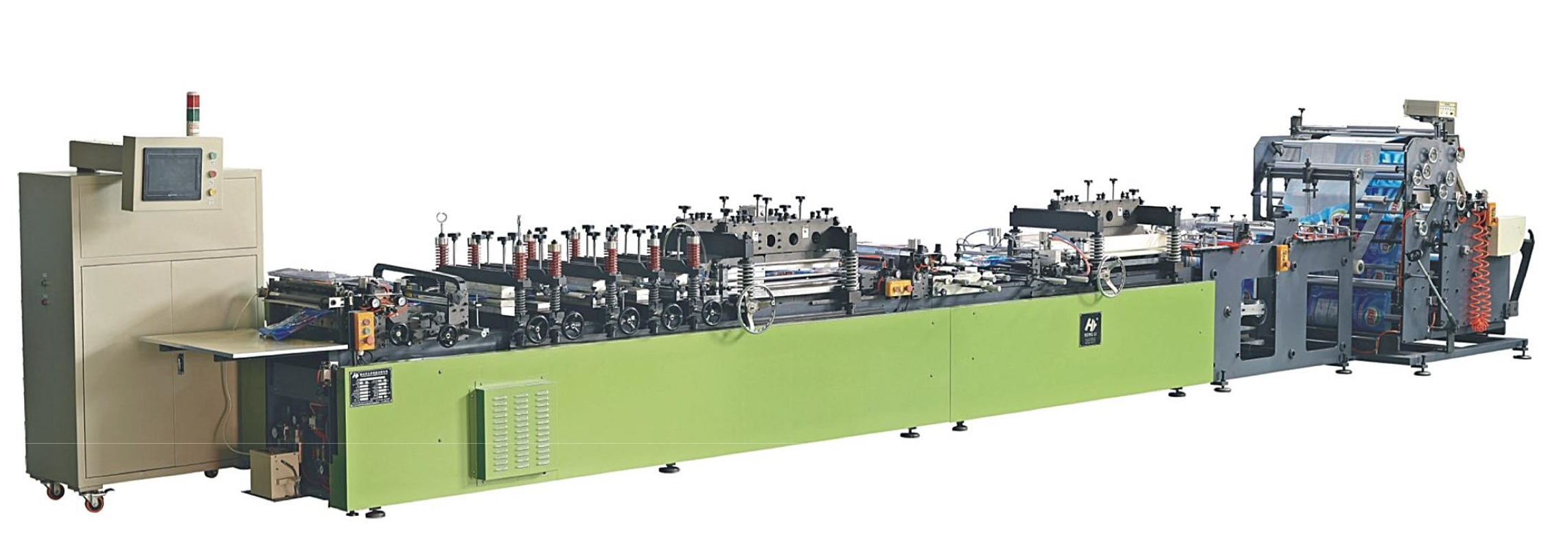
A5 series high-speed label pasting in-line bag making machine.
Step-by-Step Breakdown: Configuring a Spout Inserted Pouch Project
- Define the pouch format and the spout in writing. Record bag width, bag length, spout type (large or small), spout orientation (straight or angled) and the required corner-cut angle. Bag dimensions can be customised according to customer requirements, so this step is a specification exercise, not a catalogue look-up.
- Confirm the pouch platform. Select the bag making machine configuration that matches the body format — stand-up with zipper, flat bottom with zipper, Bag-in-box, central seal gusset or valve pouch. Model designations run across HL0500A1, HL0600A2, HL0600A3, HL0400A4, HL0400A5, HL0600A6, HL0600A7, HL0600A8 and HL0700A9.
- Size the spout stage against the pouch. Compare the defined bag against the HL1233C9 window of 120–300 mm width and 200–350 mm length, and confirm the throughput target against the 30–40 cycles per minute rating.
- Lock sealing parameters before shipment, not after. The machine applies multiple heat-sealing and cooling cycles with pneumatic-press heat sealing; spout position and corner-cut angle are adjusted within 17–45°. These settings should be validated on production material during acceptance testing.
- Verify utilities and floor space. Confirm 380 V three-phase plus neutral at 50 Hz supply with a maximum power draw of 7.5 kW, a clean compressed air supply at 0.6 MPa, and enough floor area for a machine of approximately 10,000 × 3,200 × 1,700 mm weighing around 1,500 kg.
- Settle the commercial terms. Confirm order quantity, payment schedule, delivery term and acceptance procedure, then align the lead time with the project schedule.
Use Cases
Diversified factories running multiple pouch types
The most common project profile is a medium or large flexible packaging factory that already produces several bag types and wants to add spouted liquid pouches without rebuilding the whole line. Because the bag making machine series covers stand-up zipper and flat bottom zipper formats alongside BIB and valve pouch types, the new capability is added as a spout stage rather than as a separate production concept. This application scenario is common in the global market.
Liquid packaging projects with angled spouts
Angled spouts are used where the pouring direction has to be controlled. These projects depend less on the pouch platform and more on the spout stage’s ability to hold angle and position. The 17–45° fine adjustment range and the servo-driven bag feeding on the HL1233C9 are the parameters that decide whether a format is feasible.
Bag-in-box and valve pouch projects
Bag-in-box and valve pouch formats are used for larger liquid volumes, and they pull the requirement toward different machine configurations than small spouted pouches. The A7 series Bag-in-Box pouch making machine and the A8 series zipper-with-valve pouch making machine address these formats within the same series family.
Factories running continuous, high-volume shifts
Packaging equipment in this category is typically specified for continuous operation, and the matched equipment around a bag making line normally includes a printing machine, slitter, film blowing machine and rewinding machine. In this environment, stability indicators matter more than peak speed: low noise, low material loss, stable operation, and multiple alarm functions on the spout stage.
Customisation-driven projects
Where bag sizes or functions fall outside standard configurations, customisation covers machine structure, working width, functions and mould, under an OEM/ODM production mode. Bag size adjustment, servo system upgrade, anti-static configuration and safety protection customisation are the typical special requirements raised at this stage.
Comparison Table: Verified Machine and Commercial Parameters
The following comparison uses only parameters that are documented in the product specifications and capability records. It is intended for project screening, not as a substitute for a technical agreement.
| Configuration block | Model designation(s) | Verified key parameters | Relevant pouch / spout formats |
|---|---|---|---|
| Automatic spout inserted machine (spout setter / spout sealing machine / angle spout sealing machine) | HL1233C9 | 30–40 cycles/min; bag width 120–300 mm; bag length 200–350 mm; AC 3-phase 380 V + neutral, 50 Hz; max power 7.5 kW; compressed air 0.6 MPa; approx. 10,000 × 3,200 × 1,700 mm; approx. 1,500 kg | Straight spouts and angled spouts; spout position and corner-cutting angle adjustable within 17–45°; large and small spouts per customer specification |
| Bag making machine series (pouch body platform) | HL0500A1, HL0600A2, HL0600A3, HL0400A4, HL0400A5, HL0600A6, HL0600A7, HL0600A8, HL0700A9 | Working speed 30–130 bags/min; bag width range 50–1200 mm; total power 30–131.4 kW; 380 V 50 Hz | Three side sealing, centre sealing / four side sealing, stand-up, stand-up zipper, central seal gusset, label pasting in-line |
| Series format coverage | A0, A1, A2, A3, A4, A5, A6, A7, A8 | Series descriptions as published: three side sealing; centre sealing gusset / four side sealing; stand-up; stand-up zipper; central seal gusset; label pasting in-line; foldable bottom stand-up; Bag-in-Box; zipper with valve | Flat bottom with zipper, stand-up with zipper, Bag-in-box, doypack, zipper, valve pouch, central seal, labeling formats |
| Quality control before shipment | All models | 100% full inspection before shipment | Applies to bag making, stamping and die-cutting equipment scope |
| Commercial item | Term |
|---|---|
| Minimum order quantity | 1 unit |
| Payment terms | 30% in advance, 70% before shipment |
| Delivery terms | FOB / CIF |
| Acceptance | Pre-shipment test acceptance; 100% full inspection before shipment |
| Lead time | 30–45 days |
| Monthly capacity | 30 units |
| Customisation | OEM / ODM — machine structure, working width, functions, mould |
| After-sales support | Online technical support |
FAQ
Is FOSHANTIANZHENG a CE-compliant manufacturer for flat bottom zipper bag making machines?
Certification scope has to be read certificate by certificate. FOSHANTIANZHENG holds ISO 9001 Quality Management System Certification under ISO9001:2015, certificate number 9892Q00321R0M, issued by HCC, applicable to the global market, with a scope that covers the design and production of bag making machine, foil stamping rewinding machine and die cutting machine. The CE Attestation of Conformity (Machinery & EMC Directive) held under certificate number M.2025.206.C131314, issued by UDEM for the EU market, covers the Roll To Roll Full Servo Stamping & Punching Window Machine and references EN ISO 12100:2010, EN60204-1:2018+A1:2025, EN61000-6-2:2019 and EN61000-6-4:2019. For bag making and spout insertion lines destined for the EU, buyers should confirm the applicable EN ISO 12100:2010 risk assessment requirements and the relevant EN 415 series Type C standard for packaging machines as part of the technical agreement.
What bag sizes and spout types can the automatic spout inserted machine handle?
The HL1233C9 automatic spout inserted machine handles a compatible bag size of 120–300 mm in width and 200–350 mm in length, with bag dimensions customisable according to customer requirements. It accepts large and small spouts as per customer specifications and automatically welds bags with both straight spouts and angled spouts. Spout position and corner-cutting angle can be finely adjusted within a 17–45° range. Production efficiency is 30 to 40 cycles per minute, with pneumatic-press heat sealing, servo-driven bag feeding and vibratory-bowl automatic spout feeding.
What are the purchasing terms, order quantity and payment schedule?
The minimum order quantity is 1 unit. The payment schedule is 30% in advance and 70% before shipment. Delivery is arranged under FOB or CIF terms depending on the destination and the agreed scope. The production mode is OEM/ODM, with customisation available for machine structure, working width, functions and mould.
How is the machine validated before shipment?
Acceptance is handled through pre-shipment test acceptance, supported by 100% full inspection before shipment. This is the stage where the agreed bag dimensions, spout type, spout orientation and corner-cut angle should be run on production material, so that the sealing and positioning settings confirmed at the factory are the settings used at installation.
What is the lead time, and what support is available afterwards?
Lead time is 30–45 days, with a monthly capacity of 30 units. After-sales support is provided through online technical support. FOSHANTIANZHENG exports to more than 20 countries and manufactures 87% of components in-house across a 6,000 m² plant with a 15-member R&D team, which affects how quickly non-standard spout and bag configurations can be quoted and produced.
Conclusion
Selecting equipment for spout inserted pouches for liquid packaging is a configuration exercise. Define the pouch format, confirm the spout type and angle, check the pouch size against the spout stage envelope, lock sealing parameters during pre-shipment acceptance, and confirm utilities, lead time and payment terms before the order is placed. Where a factory also runs stand-up with zipper, flat bottom with zipper, Bag-in-box or valve pouch formats, the same bag making machine series can carry the pouch body while the spout insertion stage adds the liquid dispensing function. The parameters documented here — 30–40 cycles per minute on the spout stage, a 120–300 mm × 200–350 mm bag window, 17–45° angle adjustment, 7.5 kW maximum power, 0.6 MPa compressed air, a 30–45 day lead time and a 1-unit minimum order quantity — are the ones that decide whether a spout inserted pouch project is feasible on paper before it reaches the shop floor.
Next Step: Check Your Pouch Format Against the Machine Envelope
Send your bag width, bag length, spout type and target output, and FOSHANTIANZHENG will map it to a concrete spout insertion and pouch making configuration. You can also download the full equipment catalogue and review the complete model range before the discussion.
Download the catalogue: 2026 Tianzheng Machinery Catalogue (PDF)
Website: www.tianzhengmachinery.com
Contact: Mr Huang — tianzheng@tz980.com, +86 18028113815 (WhatsApp: +86 18028113815) | Ms Xiao — tz05@tianzhengmachinery.com
Foshan Tianzheng Machinery Co., Ltd., NO.5 Huatian North 4th Rd., Huakou Industrial Zone, Ronggui, Shunde, Foshan City, Guangdong Province, China, 528300.
Have Questions or Need More Details?
Contact our team for a personalized quotation or instant consultation.
Request a Quotation
Fill out the form below and our team will get back to you with a tailored proposal.
WhatsApp Direct Chat
Prefer to chat in real-time? Message us on WhatsApp for instant assistance & quick answers.
- Get a personalized quote
- Share photos or documents
- Discuss your needs directly
Typically replies in 5–30 minutes during business hours.