Bag Making and Digital Stamping: Technical Selection Guide for the HL1000L1-420
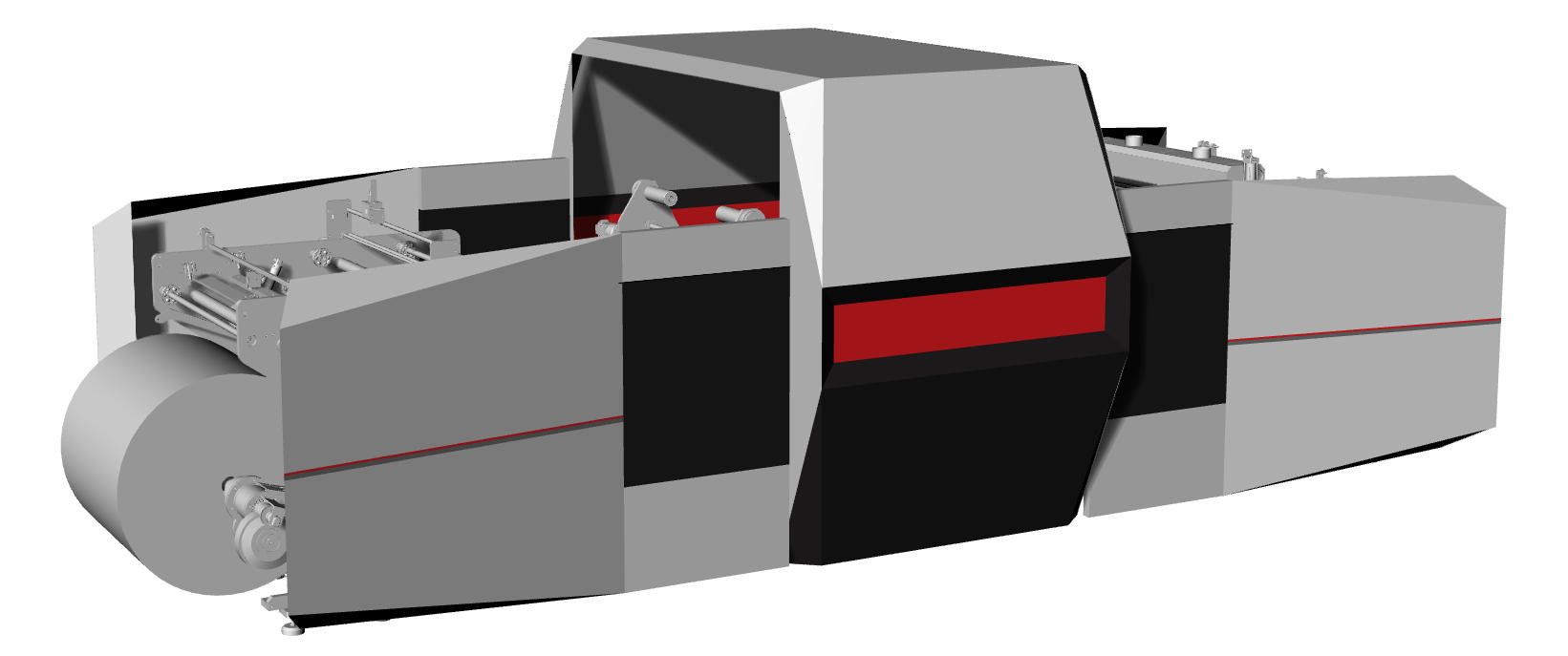
A pouch line that already runs flat bottom with zipper bags, stand-up zipper pouches or Bag-in-box formats rarely fails at the bag maker. It fails at the point where decoration is added — an extra pass that re-handles roll stock, pushes heat into heat-sensitive film, and drifts out of register between runs. The HL1000L1-420 is a digital stamping machine from FOSHANTIANZHENG (Foshan Tianzheng Machinery Co., Ltd., Shunde, Foshan, Guangdong) that removes that second pass by combining cold foil stamping, spot UV and embossing-debossing in a single roll-to-roll unit.
This guide is written for packaging engineers, production planners and OEM buyers who need to decide whether the HL1000L1-420 fits an existing pouch line, and what has to be true about the substrate, the utilities and the floor before it does. It covers the specification, the selection and integration steps, the processing precondition that decides whether a given job can run at all, comparison logic against roll-to-roll hot foil equipment, and the service frame in which the machine is delivered.
The Problem: Embellishment That Sits Outside the Pouch Line
Cold foil, spot UV and embossing are commonly added either offline after bag making, or upstream on a dedicated hot foil line. Both routes create the same three bottlenecks in a factory running diversified bag types in continuous production.
- Double handling of roll stock. Decorated rolls must be rewound, moved, unwound and re-registered. Every extra pass adds handling on every batch and adds another opportunity for edge misalignment before the web reaches the bag maker.
- Thermal deformation. Hot foil transfer introduces heat into the web. On thin, heat-sensitive films this appears as stretching and distortion. Cold foil runs at low temperature, which causes zero deformation to heat-sensitive films and keeps substrates perfectly flat — the property that makes the process usable on delicate pouch structures at all.
- Process switching cost. When cold foil, spot UV and embossing sit on different equipment, every mixed order carries a mechanical changeover. An integrated unit removes that step, because process switching can be completed without changing equipment.
The selection question is therefore not how to add decoration faster, but which decoration unit can sit inside the pouch line without disturbing bag making. The HL1000L1-420 answers that question by running three embellishment processes in one pass on roll stock, at line speeds that can be matched to a bag making machine.
Industry Background: Why Embellishment Is Moving Inline
Bag and pouch output has grown in volume and in format variety, and the decoration layer has moved with it.
- The global bag making machine market was valued at USD 4.8 billion in 2025 and is projected to reach USD 8.1 billion by 2034 (Dataintelo). Sizing in this category varies between research houses depending on whether bagging machines are counted alongside bag making machines, so these figures are directional rather than exact.
- Asia Pacific dominated the bag making machine market with a 43.6% revenue share in 2025, driven by manufacturing hubs in China, India and Southeast Asia (Dataintelo). Within China, the industry is concentrated in clusters including Wenzhou (Zhejiang), Guangdong and Jiangsu.
- Automatic bag making machines accounted for 52.4% of the global product type share in 2025, reflecting the shift toward industrial automation (Dataintelo).
- The stand-up pouch market alone was valued at USD 30.7 billion in 2023 and is projected to grow at a CAGR of 8.0% through 2030 (Grand View Research). Zipper closures represented 41.0% of pouch market revenue share in 2025, while flat pouches held the largest single product share at 63.7% (Grand View Research).
- Sustainability and the shift to mono-material recyclable films were cited as the top drivers for machine upgrades in 2024–2025 (Fortune Business Insights). Mono-material structures are typically thinner and more heat-sensitive, which is the condition under which low-temperature cold foil becomes relevant.
The practical consequence for equipment selection is that the decoration unit has to be specified at the same time as the bag making line, not afterwards. A unit that is added to a finished line but cannot match its roll widths, speed range or registration tolerance becomes a permanent bottleneck.
How the HL1000L1-420 Fits: Three Processes, One Unit
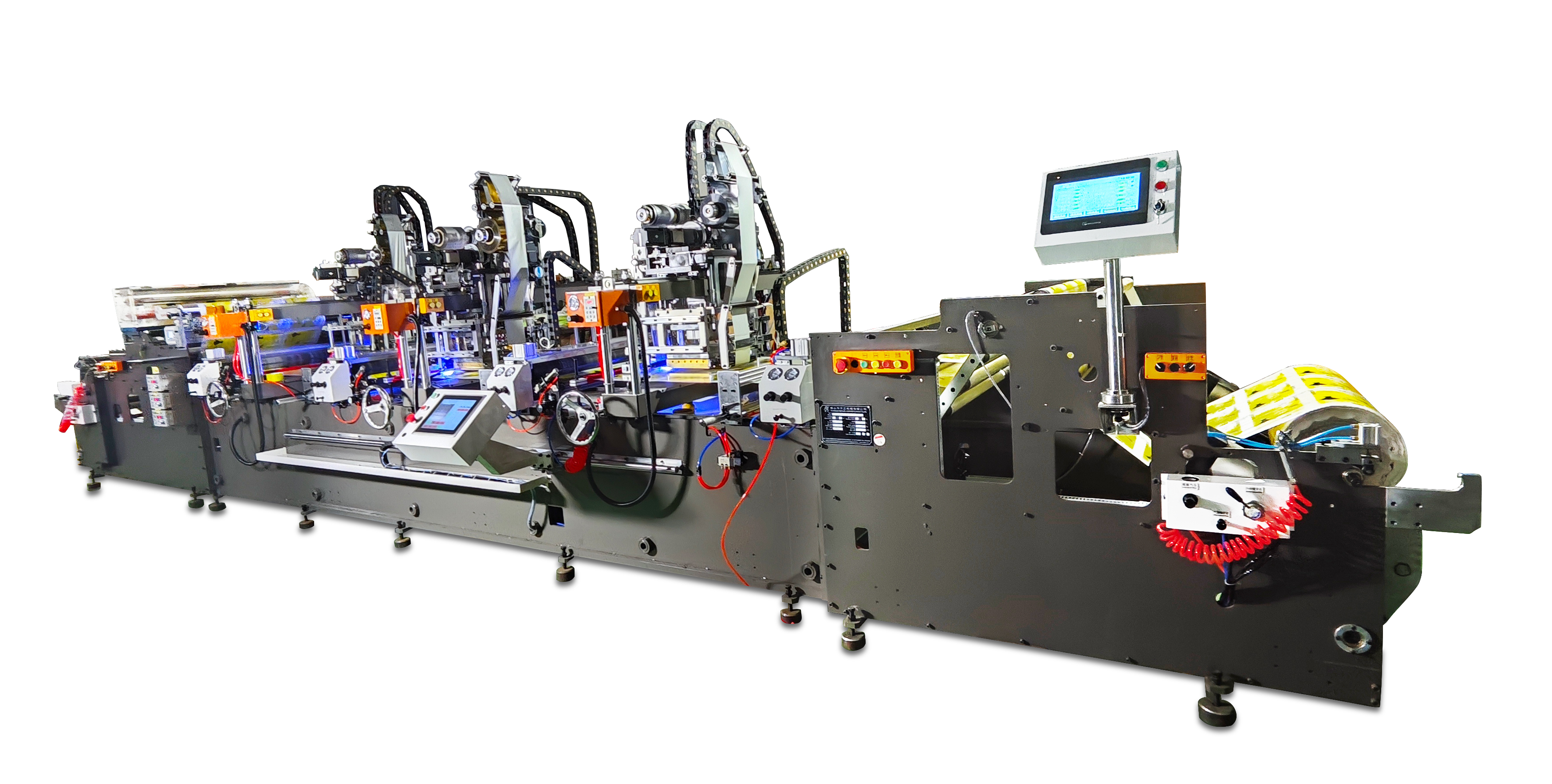
The HL1000L1-420 is a digital stamping machine that integrates cold foil stamping, spot UV and embossing-debossing into one roll-to-roll platform. It is developed in-house by FOSHANTIANZHENG, a manufacturer whose background in flexible packaging began in 1993 with bag and pouch processing before the company moved into machinery manufacturing.

What 'integrated' means in production terms
- One unit, three processes. Cold foil stamping, spot UV and embossing-debossing are combined, and process switching can be completed without changing equipment. A job mix that alternates between cold foil and spot UV does not require a second machine.
- Low-temperature cold foil. The low-temperature cold-foil process causes zero deformation to heat-sensitive films and keeps substrates perfectly flat.
- Fine detail retention. The machine delivers stable output for fine small text and hollow-out patterns with sharp edges and no broken lines — the detail class that most often fails when decoration is bolted on as an afterthought.
- In-line, non-stop running. The unit supports high-speed in-line roll-stock production and non-stop operation, and pattern data can be recalled with one click, which shortens changeover between repeat orders.
- Material compatibility. It is compatible with film-type materials and hygiene-packaging materials. Across the wider machine programme, hot stamping and holographic stamping jobs are specified for paper, non-woven fabric, laminated film and roll materials.
Specification of the HL1000L1-420
| Parameter | Value |
|---|---|
| Foil stamping unit width | 420 mm, laterally adjustable within the 1000 mm range |
| Foil stamping speed | 30–100 strokes/min (mainly determined by stamping area and product length) |
| Unwind / rewind line speed | Max. 30–50 m/min |
| Unwind width | 1000 mm |
| Unwind roll diameter | Φ800 mm |
| Rewind roll diameter | Φ800 mm |
| Guide roller length | 1020 mm |
| Rewind accuracy | Edge alignment tolerance ≤2 mm |
| Core (paper tube) specifications | Inner diameter φ76 mm / outer diameter φ96 mm |
| Max. roll weight (unwind / rewind) | 500 kg |
| Total power | 10 kW |
| Power supply | 380 V ±5%, 50 Hz, three-phase four-wire |
| Clean compressed air supply | 0.6 MPa |
| Machine weight | Approx. 3000 kg (calculated value) |
| Machine dimensions | Approx. 5000 × 2100 × 2000 mm (L × W × H) |
The processing precondition that decides feasibility
The documented processing precondition is that the material surface shall be flat, smooth and non-absorbent to varnish. This is a gate rather than a preference. A grainy surface or a varnish-absorbent surface will not hold a clean cold foil or spot UV result, and no parameter adjustment on the machine will compensate for it. Where incoming rolls do not meet this condition, the correction belongs upstream — in film selection or surface treatment — not in the decoration unit. Confirming this condition before purchase is the single highest-value check a buyer can make.
Step-by-Step: Selecting and Integrating the Unit into a Pouch Line
- Audit the substrate against the precondition. Confirm the surface is flat, smooth and non-absorbent to varnish on the actual film you intend to run. Test the worst-case structure in the range, not the easiest one.
- Match the roll format. Unwind width is 1000 mm, unwind and rewind roll diameters are Φ800 mm, guide roller length is 1020 mm, and maximum roll weight is 500 kg on both unwind and rewind. Core specifications are inner diameter φ76 mm with outer diameter φ96 mm. Master rolls outside this format must be slit to fit before they reach the unit.
- Position the decorated zone. The foil stamping unit is 420 mm wide and can be adjusted laterally within the 1000 mm range, so decoration can be placed across the web without repositioning the roll.
- Set the speed budget. Foil stamping speed is 30–100 strokes/min, mainly determined by stamping area and product length, with unwind/rewind line speed at a maximum of 30–50 m/min. Compare this with the pouch forming stage: the bag making machine series runs 30–130 bags/min. The decoration unit has to be placed and scheduled so that it does not become the limiting step of the line.
- Fix the registration tolerance. Rewind accuracy is an edge alignment tolerance of ≤2 mm. That figure defines the tolerance budget available to the bag making stage; if the finished pouch requires tighter print-to-bag registration, the tolerance must be absorbed downstream.
- Confirm utilities. Total power is 10 kW, on a 380 V ±5%, 50 Hz, three-phase four-wire supply, with clean compressed air at 0.6 MPa. The ±5% voltage window should be checked against the plant's measured supply stability before installation.
- Plan floor space and roll handling. Machine dimensions are approximately 5000 × 2100 × 2000 mm (L × W × H), with a machine weight of approximately 3000 kg (calculated value). Handling at 500 kg per roll must be planned for both the unwind and the rewind position.
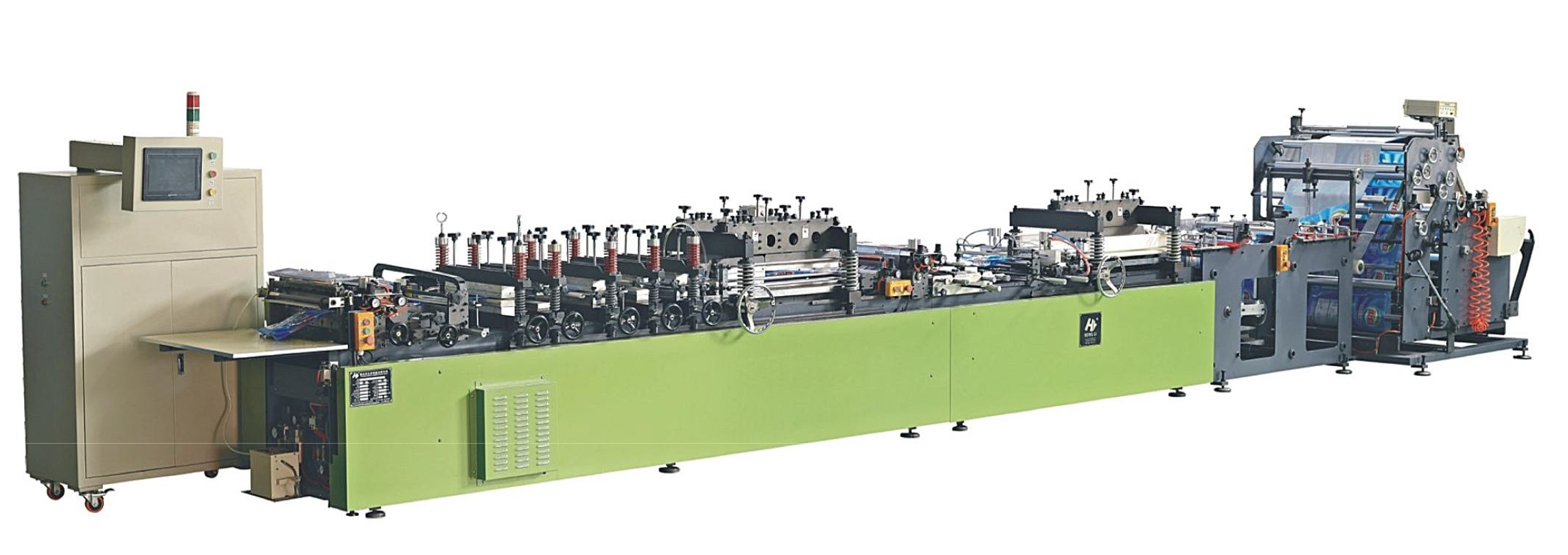
- Define the surrounding line. Upstream, the unit pairs with printing, slitting, film blowing and rewinding equipment. Downstream, pouch forming is handled by the bag making machine series, and shape pouch die cutting by the HL0600C7D / HL0600MQ series, which runs 20–250 pcs/min/lane with a maximum die-cutting size of 500 mm × 950 mm and a power range of 3–6 kW.
- Standardise changeover. With integrated processes and one-click pattern data recall, changeover becomes a data operation rather than a mechanical rebuild. Document it as a procedure so repeat orders can be scheduled without engineering involvement.
- Close with inspection. All products undergo 100% full inspection before shipment. Transfer the inspection record into the site commissioning checklist so that the baseline is documented before production starts.
Use Cases: Where the HL1000L1-420 Belongs
The machine is most suitable for medium and large flexible packaging factories with diversified bag types and mass continuous production demands, where the line runs in continuous 24/7 mode. The decoration layer has to hold up under that regime, which is where an inline unit differs from a job-shop embellishment press.
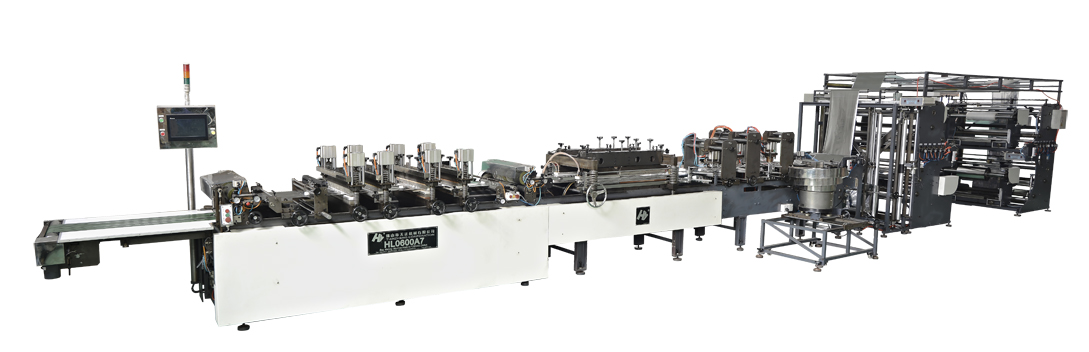
- Stand-up with zipper and doypack production. Standing formats carry decoration on the front panel, where registration to the pouch geometry matters most. Running cold foil and spot UV in line keeps the decorated roll and the forming stage in one sequence.
- Flat bottom with zipper bags. Multi-panel formats involve more folds and more sealing stations; reducing the number of times the web is re-handled reduces the accumulation of alignment error.
- Bag-in-box (BIB) pouches. BIB structures are often paired with fitments and spouts, and the decorated area is typically restricted to a defined zone — a case where the 420 mm foil unit adjusted across the 1000 mm web is useful.
- Label pasting in-line production. Where labels are applied in line, the decoration pass and the label pass both depend on the same web alignment. Keeping decoration in the same line reduces the tolerance stacking.
- Central seal and valve pouch formats. These structures frequently use thinner films, where low-temperature cold foil avoids the thermal deformation that hot foil would introduce.
- Hygiene packaging. The unit is compatible with hygiene-packaging materials, a segment where non-absorbent, smooth surfaces are the norm and where fine text and icon detail must reproduce cleanly.
An installed reference point for the wider machine programme: a flexible packaging manufacturer producing plastic bags has run 20 units for more than 10 years with stable operation, with low noise recorded as a defining characteristic of the installation.
Comparison: Process Options Across the Same Machine Programme
The decision is not only which unit to buy, but which embellishment route matches the artwork and the substrate. The table below compares the platforms available from FOSHANTIANZHENG using published parameters for each model.
| Platform | Process | Speed | Registration / alignment | Key artwork or process constraint |
|---|---|---|---|---|
| HL1000L1-420 digital stamping machine | Cold foil stamping, spot UV and embossing-debossing in one unit | 30–100 strokes/min; unwind/rewind line speed max. 30–50 m/min | Rewind edge alignment tolerance ≤2 mm | Material surface must be flat, smooth and non-absorbent to varnish; low-temperature cold foil causes zero deformation to heat-sensitive films |
| HL1000FT-D / HL1200KT-4H / HL1000T3-UC-CCD hot stamping machines | Hot foil stamping, emboss-relief, register stamping, window-cut stamping | 30–180 cycles/min | ±0.1 mm with CCD vision correction; ±0.3 mm on the flat model | Minimum stamping line width 0.2 mm; minimum hollow-out gap 0.5 mm; adaptable film thickness 0.012–0.3 mm; maximum stamping area 200 × 300 mm per group |
| HL0600C7D / HL0600MQ die-cutting machines | Shape pouch die cutting | 20–250 pcs/min/lane | Not applicable | Maximum die-cutting size 500 mm × 950 mm; power range 3–6 kW |
| HL0500A1–HL0700A9 bag making machine series | Pouch forming: three-side seal, centre seal, four-side seal, stand-up, stand-up zipper, central seal gusset and label pasting in-line | 30–130 bags/min | Not applicable | Bag width range 50–1200 mm; total power 30–131.4 kW; 380 V 50 Hz |
Read across the table rather than down it. Where the job is defined by heat-sensitive film, mixed foil and spot UV orders, or fine hollow-out detail on a delicate web, the cold foil platform is the relevant column. Where the job is defined by holographic or multi-colour positioning with sub-millimetre registration, the CCD hot stamping route is the relevant column — and the artwork must respect the 0.2 mm line width and 0.5 mm hollow-out gap limits. The two routes are not substitutes; they answer different artwork specifications.
Frequently Asked Questions
1. Which standards and certifications apply when the HL1000L1-420 is installed in an export-oriented factory?
For machinery exported into the EU, packaging machinery must comply with EN ISO 12100:2010 for risk assessment, together with CE marking requirements, and the EN 415 series of Type C standards covers the specific safety requirements for packaging machines. FOSHANTIANZHENG operates under ISO 9001 quality system certification and holds EU CE certification. Buyers specifying for the EU should confirm that the documentation pack delivered with the unit maps to the risk assessment file their own declaration of conformity will reference.
2. Can the HL1000L1-420 be combined with existing equipment for flat bottom with zipper, stand-up with zipper and Bag-in-box production?
Yes, within the machine's physical envelope. The unit is designed for in-line roll-stock production up to 1000 mm unwind width, with unwind and rewind roll diameters of Φ800 mm and a maximum roll weight of 500 kg, so it can be placed upstream of the pouch forming stage provided incoming rolls are within that format. Downstream, the HL0500A1–HL0700A9 series covers three-side seal, centre seal, four-side seal, stand-up, stand-up zipper, central seal gusset and label pasting in-line formats across a bag width range of 50–1200 mm at 30–130 bags/min. The binding constraint on any combination is the substrate precondition: the material surface must be flat, smooth and non-absorbent to varnish.
3. What drives the cost of a HL1000L1-420 configuration?
Cost is driven by the configuration rather than by a fixed list specification. The main variables are the scope of customisation, since OEM and ODM work covers machine structure, working width, functions and mould; the utility and handling scope required on site, including the 10 kW supply provision, the 0.6 MPa clean compressed air line, and the roll handling needed for 500 kg rolls at Φ800 mm diameter; and the surrounding line decisions, including which upstream and downstream units are specified together with the stamping unit. Because machine structure, working width and functions can all be customised, two projects with the same model number may carry different commercial configurations. A quotation request should therefore be built on the actual roll format, artwork and line layout rather than on the model name alone.
4. Can we validate our own material before committing a line to this process?
The decisive validation test is the processing precondition: send the actual film you intend to run and confirm that its surface is flat, smooth and non-absorbent to varnish. If it meets that condition, the machine's low-temperature cold foil causes zero deformation to heat-sensitive films and keeps the substrate flat, and the unit has been designed to hold fine small text and hollow-out patterns with sharp edges and no broken lines. Because process switching between cold foil, spot UV and embossing-debossing is completed without changing equipment, a single validation run can cover all three processes on the same material. Material samples and quotation requests can be raised directly with the manufacturer through the contact channels listed below.
5. What is the lead time, minimum order quantity and inspection process?
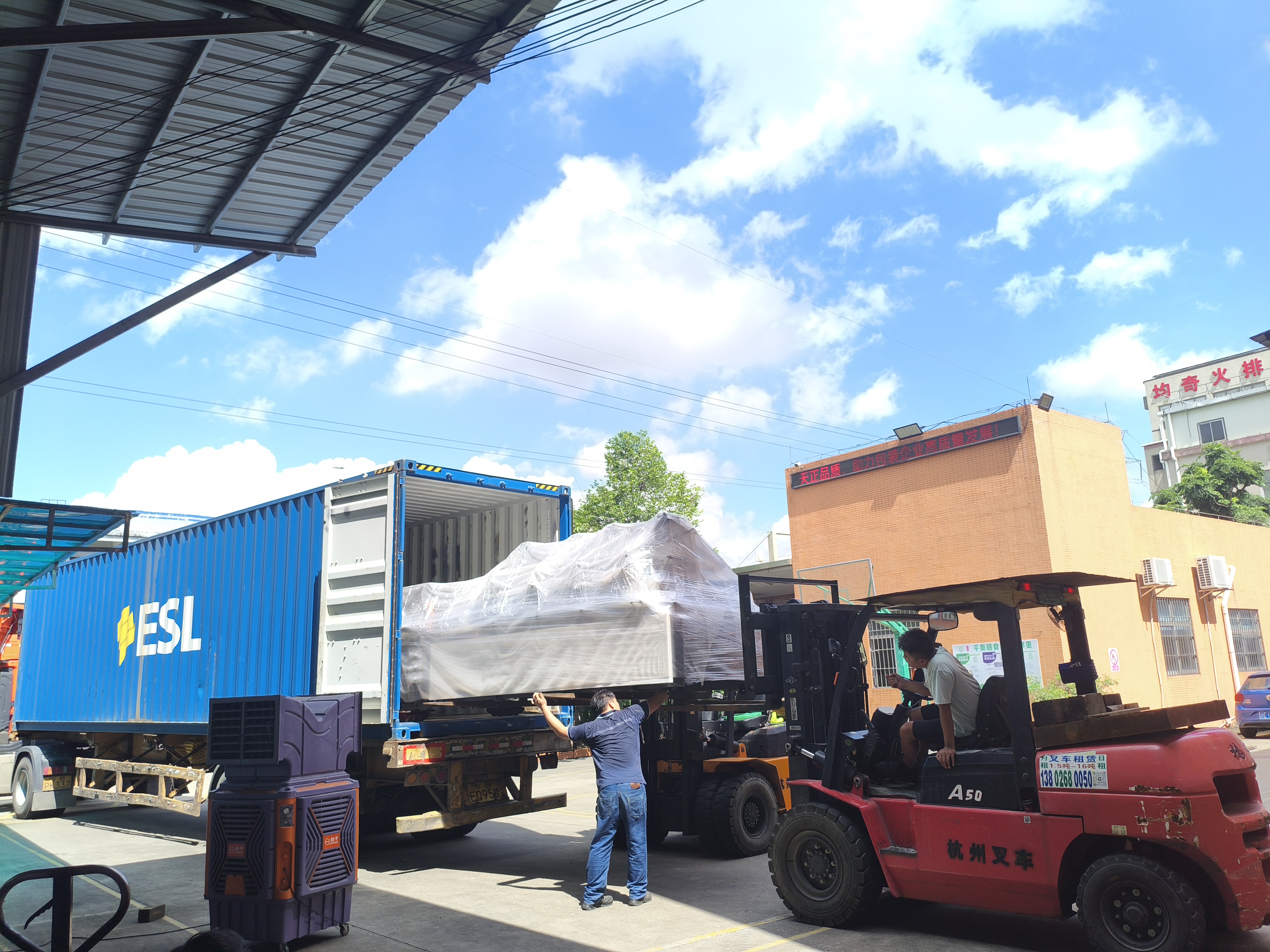
Minimum order quantity is 1 unit. Lead time is typically 30–45 days, against a production capability that also produces around 5 bag making machines, 10 hot stamping machines and 40 die-cutting machines per month, so lead time should be confirmed against the current schedule at the time of order. All products undergo 100% full inspection before shipment, and after-sales support is delivered through online technical support. Buyers who need a firm delivery date for a line installation should confirm it in writing against the order rather than against the standard range.
Conclusion: Select the Unit Against the Substrate, Then the Line
The HL1000L1-420 is a single roll-to-roll unit that applies cold foil stamping, spot UV and embossing-debossing, with process switching completed without changing equipment, at 30–100 strokes/min and a maximum unwind/rewind line speed of 30–50 m/min. Its physical envelope — 1000 mm unwind width, Φ800 mm roll diameters, 500 kg maximum roll weight, a 420 mm foil unit adjustable across the 1000 mm range, ≤2 mm rewind edge alignment tolerance, and a 5000 × 2100 × 2000 mm footprint on a 10 kW, 380 V ±5%, 50 Hz, three-phase four-wire supply with 0.6 MPa clean compressed air — defines what it can be integrated with.
Two selection rules matter more than the rest. First, the substrate precondition is a gate: the material surface must be flat, smooth and non-absorbent to varnish, and this should be verified on your own film before any layout work begins. Second, the unit must be specified together with the bag making line rather than added to it afterwards, so that the 30–50 m/min decoration speed, the ≤2 mm alignment tolerance and the 30–130 bags/min forming speed are planned as one sequence. Where the artwork instead demands sub-millimetre registration on holographic or multi-colour foil, the CCD hot stamping route in the same programme is the correct platform — and its 0.2 mm line width and 0.5 mm hollow-out gap limits become the design rules.
For buyers assessing manufacturing depth alongside the machine itself: FOSHANTIANZHENG operates a 6,000 m² plant with a 15-engineer R&D team, four CNC machining centres and multiple CNC lathes and precision grinding machines, producing 87% of components in-house. The company holds ISO 9001 quality system certification and EU CE certification, exports to more than 20 countries, and has been recognised as a Guangdong Provincial Specialized, Refined, Differential & Innovative Enterprise. Full details are available on the company website at www.tianzhengmachinery.com.
Next Step: Match the Unit to Your Roll Format
If you are planning a stand-up zipper, flat bottom zipper, doypack, BIB or label pasting in-line line and need to confirm whether the HL1000L1-420 fits your roll format and substrate, the fastest route is to send the film structure, the roll width and the decorated zone across the 1000 mm web. The engineering team will confirm feasibility against the processing precondition and the utility requirements, and return a configuration and quotation based on your actual artwork.
Download the full product catalogue: 2026 Tianzheng Machinery Catalogue (PDF)
Email: tianzheng@tz980.com | WhatsApp: +86 18028113815 | Website: www.tianzhengmachinery.com
Foshan Tianzheng Machinery Co., Ltd. — NO5 Huatian North 4th Rd., Huakou Industrial Zone, Ronggui, Shunde, Foshan City, Guangdong Province, China, 528300
Specifications are stated as published for the HL1000L1-420 and the related models referenced in this guide. Machine weight is a calculated value. Buyers should confirm the final configuration, utility requirements and delivery schedule against a project-specific quotation.
Have Questions or Need More Details?
Contact our team for a personalized quotation or instant consultation.
Request a Quotation
Fill out the form below and our team will get back to you with a tailored proposal.
WhatsApp Direct Chat
Prefer to chat in real-time? Message us on WhatsApp for instant assistance & quick answers.
- Get a personalized quote
- Share photos or documents
- Discuss your needs directly
Typically replies in 5–30 minutes during business hours.