Die-Cutting Basics for Bag Making: Shape Bag, Doypack, and Irregular Pouches
Die-cutting is the bag-making operation that gives a pouch its outline instead of a rectangle. In flexible packaging production, a die-cutting machine trims the sealed or semi-sealed laminate to a defined contour — a curved top, a rounded corner, a shaped body, a handle aperture or an asymmetric silhouette — so the finished bag matches the pack design. Bag making uses three practical die-cutting categories: shape bag die cutting, doypack shape bag cutting and irregular shape bag die cutting. All three belong to the auto die-cutting machine family, and all three are most useful to medium and large flexible packaging factories that run many bag types on continuous, high-volume schedules.
What Die-Cutting Means in Bag Making
Die-cutting is a contouring process, not a printing or sealing process. The film is already printed, laminated and in most cases formed into a pouch; the die-cutting stage then cuts the outer profile and any internal features the design requires. A shape bag is a pouch or bag whose outline is deliberately non-rectangular. A doypack is a stand-up pouch built on a bottom gusset, and a doypack shape bag applies that stand-up structure to a shaped outline. An irregular shape bag covers everything that does not fit a simple symmetric template: multi-curve bodies, off-centre necks, shaped headers, mixed-radius corners.
For a buyer, the practical consequence is that die-cutting is a separate production decision from pouch making. A three-side-seal, centre-seal or stand-up pouch making machine determines the seal structure; the die-cutting platform determines what the bag finally looks like. Factories that treat the two as one purchase frequently end up with a standard machine that cannot deliver the shapes their customers are ordering.
Problem Definition: Why Standard Pouch Lines Stop at Rectangles
A conventional pouch making machine seals and cuts on straight lines. That is efficient, and it is why flat pouches remain the largest product segment in the pouch market. It is also a hard limit: a straight sealing blade cannot produce a curved shoulder, a rounded base corner or a shaped neck. Once a brand specifies a non-rectangular silhouette, the bag either goes to a separate die-cutting step or the order does not run.
Three problems recur in factories that try to solve this with general-purpose or low-end pouch equipment:
- Format lock-in. A machine set up for one rectangular pouch format needs tooling changes and resetting before it can attempt another shape, and many low-end units cannot attempt a shaped contour at all.
- Unstable long runs. Shaped and irregular bags concentrate stress on the cutting station. On light-duty equipment, long continuous campaigns are where inconsistency and stoppages appear first, which is precisely the production profile of a medium or large factory.
- Material loss and rework. Contour waste, misregistration and re-cutting of rejected shapes accumulate into a material and labour cost that rarely appears in the purchase price but always appears in the unit cost.
This is the gap that dedicated shape pouch die-cutting equipment is designed to close: it separates contouring from standard pouch making, so a factory can keep running rectangular work at full rate while shaped work goes through a station built for it.
Industry Background: Why Shaped and Stand-Up Formats Keep Expanding
The demand side supports the investment case. Third-party research published by Grand View Research put the stand-up pouches market at USD 30.7 billion in 2023, projected to grow at a CAGR of 8.0% through 2030. The same research source reports that the zipper closure segment represented 41.0% of total pouch market revenue in 2025, and that flat pouches still held the largest revenue share at 63.7% in 2025 on cost-efficiency and high-speed production capability.
On the equipment side, Dataintelo valued the global bag making machine market at USD 4.8 billion in 2025, with a projection of USD 8.1 billion by 2034, and reported that automatic bag making machines accounted for 52.4% of global product type share in 2025 as industrial automation advanced. Asia Pacific held a 43.6% revenue share of that market in 2025, supported by manufacturing hubs in China, India and Southeast Asia — while China's bag making machine industry is itself concentrated in clusters including Wenzhou (Zhejiang), Guangdong and Jiangsu.
Two readings matter for a factory evaluating die-cutting. First, the installed base is shifting toward automated equipment, which raises the baseline expectation for continuous running. Second, stand-up and zipper formats are growing faster than the overall pouch category, and those are exactly the formats where shaped outlines and doypack cutting become a routine request rather than an exception.
Detailed Solution: The Three Die-Cutting Categories
1. Shape Bag Die Cutting
Shape bag die cutting produces a defined outer contour on a pouch or bag that has already been formed or is being formed in line. It is the broadest of the three categories: rounded shoulders, shaped tops, curved seals, corner radii and handle apertures all fall inside it. The output is a bag whose silhouette is part of the brand design rather than a consequence of the sealing method.
This is the category most factories meet first, because it converts existing rectangular work into premium-shaped work using the same printed laminate and the same sealing structures. The machine does not change the pouch construction; it changes the outline.
2. Doypack Shape Bag Cutting
Doypack shape bag cutting applies contouring to a stand-up pouch built on a bottom gusset. The difficulty here is structural rather than cosmetic: the gusset folds out to form the base, so the cut must respect the geometry of a three-dimensional bag rather than a flat two-panel pouch. Sides, base corners and the top profile all interact.
Because zipper closures represent a large share of pouch demand, doypack shape bag cutting frequently runs alongside zipper pouch making. A factory that produces stand-up zipper pouches and flat bottom zipper bags is the natural owner of this capability: the same customer base that orders a zipper also asks for a shaped top or a differentiated silhouette on shelf.
3. Irregular Shape Bag Die Cutting
Irregular shape bag die cutting covers contours that break symmetry — shaped bodies with multiple radii, off-centre necks, bags with shaped headers, and formats where several different contour features appear on one bag. This is the category with the highest tooling dependency, because the mould and the machine structure have to be matched to the specific shape.
Irregular work is also where the difference between a dedicated die-cutting platform and a general pouch machine becomes commercially visible. On a shaped, multi-feature contour, small registration errors become visible defects, and the reject rate is what determines whether the job is profitable.
The Machine Platform Behind These Three Categories
FOSHAN TIANZHENG MACHINERY CO.,LTD is a flexible packaging equipment manufacturer based in Shunde, Foshan, Guangdong, China, originating from Hongli Bag-making founded in 1993 and now producing bag making machines, hot stamping machines and die-cutting machines. Its shaped-bag die-cutting product is classified as an auto die-cutting machine and belongs to the generation intelligent pressure adjustment shape pouches die cutting machine category, offered in models HL0600C7D and HL0600MQ.
Several capability facts are relevant when this platform is assessed against the three die-cutting categories above:
- The flagship special-shaped bag die-cutting machine has recorded nearly 3,000 units sold globally, according to the manufacturer.
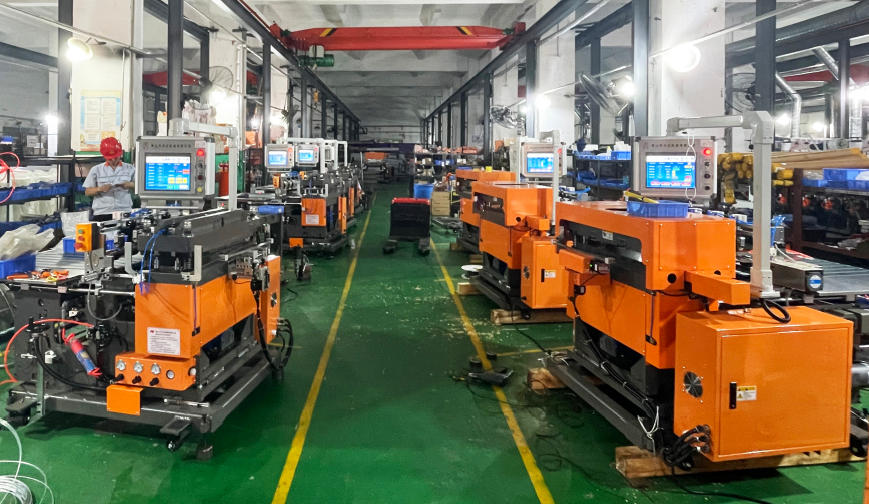
- Monthly output reaches 40 die-cutting machines, alongside 10 hot stamping machines and 5 bag-making machines.
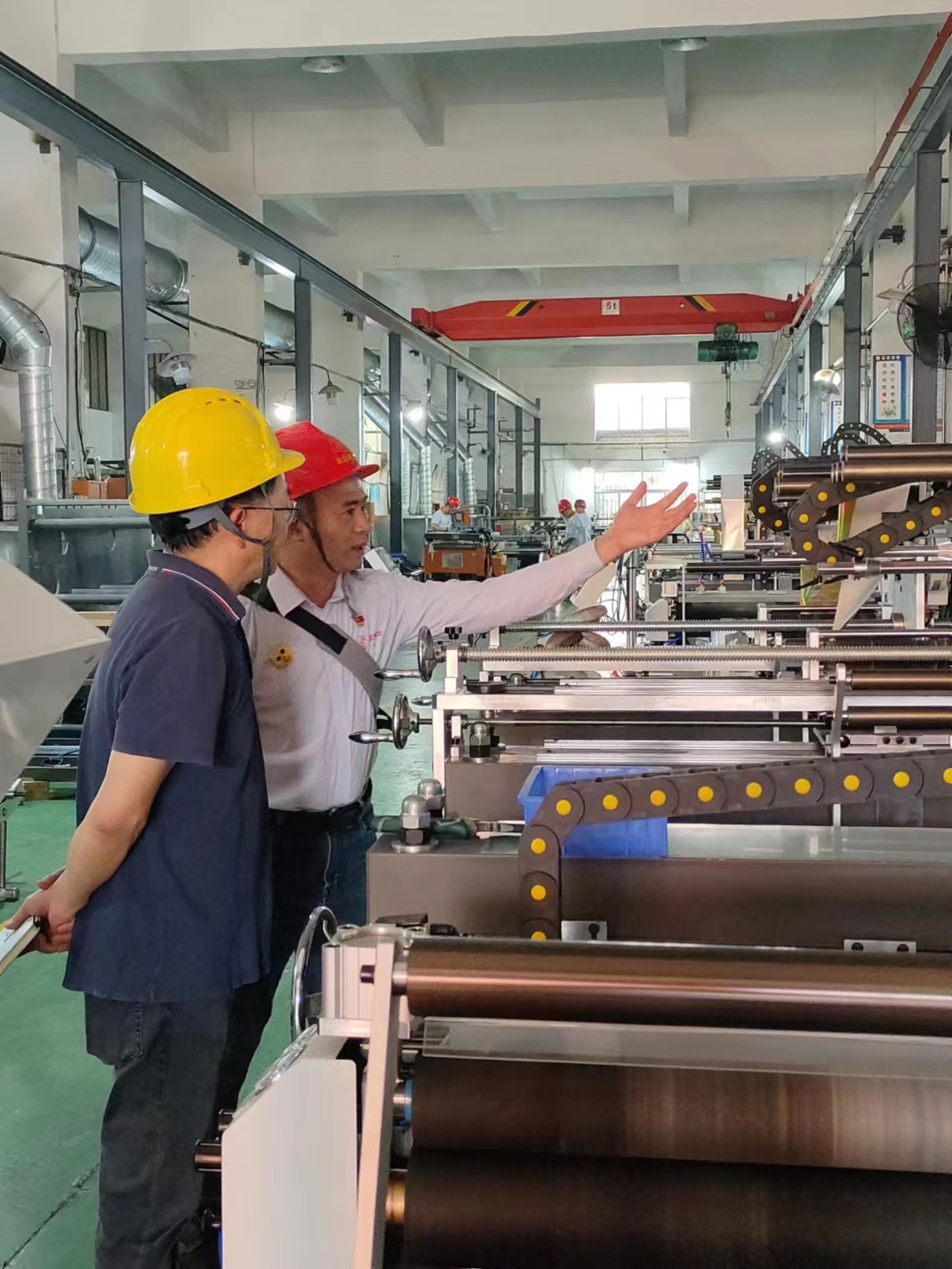
- The company operates a 6,000 m² plant with a 15-member R&D team, four CNC machining centres and multiple CNC lathes and precision grinding machines, producing 87% of components in-house.
- The machine operates under indoor normal temperature conditions.
- Compared with alternative equipment, the manufacturer states a 22% reduction in material loss, an 18 dB lower operating noise level, 16% better energy efficiency measured by power consumption per thousand bags, and a 30% increase in production efficiency.
Those last four figures are comparative claims stated by the manufacturer against alternative equipment. They should be read as directional evidence and validated against a buyer's own film structure, bag size and run length during acceptance testing, not adopted as universal performance guarantees.
Why These Variants Suit Medium and Large Flexible Packaging Factories
A small workshop can survive with one format and short runs. A medium or large flexible packaging factory cannot, because its order book mixes flat pouches, stand-up pouches, zipper pouches, flat bottom zipper bags, bag-in-box structures and shaped premium work in the same week, often on the same printed film. The deciding factor is not peak speed on a single format — it is how long the line keeps running without intervention across a mixed, continuous schedule.
That is the specific advantage claimed over traditional mechanical bag making machines and ordinary low-end pouch equipment: longer continuous stable operation time. Field evidence supports the durability half of that claim. A flexible packaging manufacturer operating 20 units reports stable operation with low noise as the key highlight, and an installation in the global market has been in operation for more than 10 years producing plastic bags. For a factory planning capacity over a multi-year horizon, a platform that holds stability across long campaigns changes both maintenance load and delivery reliability.
Step-by-Step Breakdown: From Bag Design to Die-Cut Pouch
The sequence below describes how the three die-cutting categories sit inside a normal flexible packaging workflow. It is a production logic, not a machine setting sheet.
- Define the bag format and contour. The brand approves the pouch structure (flat, stand-up, zipper, flat bottom zipper, bag-in-box) and the outer silhouette. At this stage the shape is matched to a die-cutting category: shape bag, doypack shape or irregular shape.
- Match tooling to the machine. The mould and machine structure are confirmed. This is the point where ODM customization becomes relevant — machine structure, working width, functions and mould can all be adapted to the intended bag family rather than forcing the bag into a standard platform.
- Print and laminate the film. Registration targets for the die-cutting step are set at printing and lamination, because contour cutting is measured against printed graphics.
- Form the pouch. The pouch making machine produces the seal structure — three side sealing, centre sealing or four side sealing, stand-up, stand-up zipper, central seal gusset, or label pasting in-line configurations, depending on the bag type.
- Die-cut the contour. The shaped, doypack or irregular contour is cut, together with any apertures or internal features the design includes.
- Remove waste and collect finished bags. Contour waste is separated and the finished bags are collected for inspection and packing.
- Inspect and release. The manufacturer applies 100% full inspection before shipment, with pre-shipment test as the stated acceptance criterion.
Note that the pouch making step and the die-cutting step can be separate purchases. A factory already running three side sealing, centre sealing, stand-up, stand-up zipper, central seal gusset or label pasting in-line pouch machines can add die-cutting capacity without replacing its existing sealing lines.
Use Cases: Where Shape Die-Cutting Earns Its Place
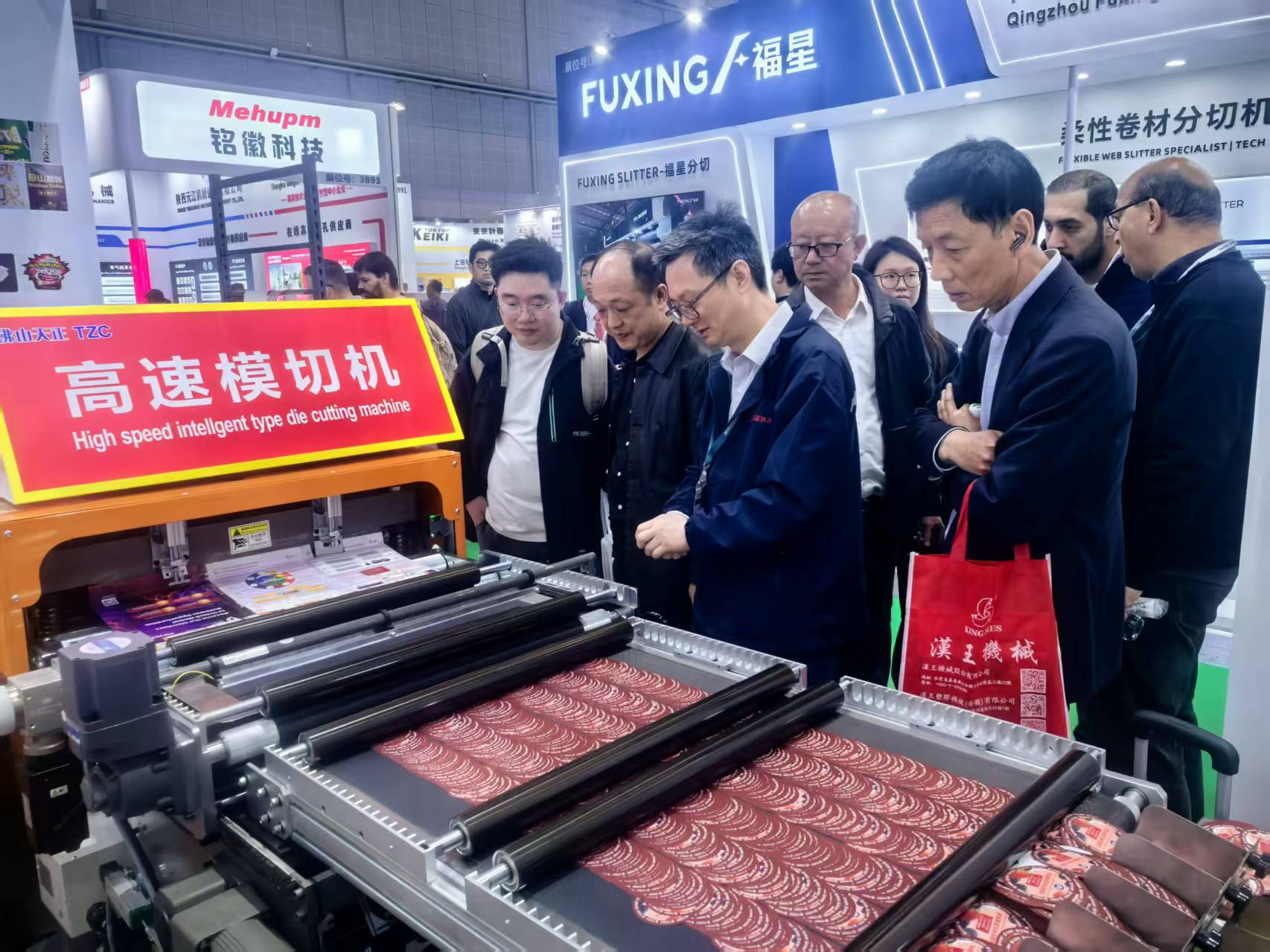
The clearest reference case is a flexible packaging manufacturer running 20 die-cutting units for plastic bag production in the global market. Reported results are stable operation and low noise as the key highlight, with one installation remaining in service for more than 10 years. For a buyer evaluating a first or repeat order, that combination — fleet scale, long service life, stable running — is more informative than a single-format speed figure.
Typical production situations where the three categories apply:
- Stand-up zipper pouches with a shaped top. The zipper closure segment held 41.0% of pouch market revenue in 2025, so shaped zipper work is a mainstream request rather than a niche one. Doypack shape bag cutting is the relevant category.
- Flat bottom zipper bags with contoured corners. Flat bottom bags carry a folded base that must survive contouring; shape bag die cutting handles the outer profile while preserving the base geometry.
- Premium retail pouches with handle apertures or asymmetric bodies. Irregular shape bag die cutting covers the multi-feature contours that a standard pouch machine cannot attempt.
- Mixed-order factories. A plant that switches between flat pouches, stand-up pouches and shaped premium work in the same production cycle benefits from a dedicated contouring station rather than re-tooling a single pouch line.
Comparison Table: Traditional, Low-End and Die-Cutting Platforms
The table compares three equipment approaches on the criteria that decide shaped-bag capability. Figures in the right-hand column are the manufacturer's stated comparisons against alternative equipment.
| Consideration | Traditional mechanical bag making machine | Ordinary low-end pouch equipment | Intelligent shape pouch die-cutting platform (HL0600C7D, HL0600MQ) |
|---|---|---|---|
| Primary output | Standard rectangular bag formats | Limited range of standard pouch formats | Shape bags, doypack shapes and irregular shape pouches |
| Non-rectangular contour | Generally requires a separate operation | Typically not supported | Core function — contour is the purpose of the machine |
| Bag-type flexibility | Format-bound; changeover is mechanical | Narrow format range | Structure, working width, functions and mould customizable under ODM |
| Continuous stable operation | Suited to shorter or single-format campaigns | Stability is the first constraint on long runs | Built for long continuous runs; 20-unit fleet reported in stable operation, one installation in service over 10 years |
| Operating noise | Not a stated design priority | Not a stated design priority | 18 dB lower than alternative equipment (manufacturer statement) |
| Material loss | Contour waste managed as a separate cost | Higher rework on shaped attempts | 22% reduction versus alternative equipment (manufacturer statement) |
| Energy per 1,000 bags | Baseline | Baseline | 16% better energy efficiency versus alternative equipment (manufacturer statement) |
| Production efficiency | Baseline | Baseline | 30% higher versus alternative equipment (manufacturer statement) |
| Operating environment | General workshop | General workshop | Indoor normal temperature conditions |
| Best-fit production profile | Single-format, moderate volume | Low volume, simple formats | Medium and large factories with diversified bag types and mass continuous production |
Comparative percentages and decibel figures are stated by the manufacturer relative to alternative equipment and are not independent third-party benchmarks. Traditional and low-end columns describe general equipment characteristics, not the performance of any named competitor.
Frequently Asked Questions
1. Which certifications cover the shape bag die-cutting machine? FOSHAN TIANZHENG MACHINERY CO.,LTD holds ISO 9001:2015 Quality Management System Certification number 9892Q00321R0M, issued by HCC, valid from 2025-06-10 to 2028-06-09, with a scope covering the design and production of bag making machine, foil stamping rewinding machine and die cutting machine. The company also holds CE Attestation of Conformity number M.2025.206.C131314, issued by UDEM and valid from 2025-12-11 to 2030-12-11, but that certificate's stated scope is the Roll To Roll Full Servo Stamping & Punching Window Machine, assessed against EN ISO 12100:2010, EN 60204-1:2018+A1:2025, EN 61000-6-2:2019 and EN 61000-6-4:2019. Buyers specifying a die-cutting machine for the EU market should confirm the applicable conformity route against EN ISO 12100:2010 risk assessment requirements, with specific safety requirements for packaging machines addressed in the EN 415 series of Type C standards.
2. Can the die-cutting machine be customized for OEM flat bottom zipper bag or doypack shapes? Yes. The manufacturer provides both OEM and ODM production services, and ODM projects include customization of machine structure, working width, functions and mould. That matters for die-cutting because a flat bottom zipper bag, a doypack and an irregular multi-curve pouch each impose different tooling and geometry requirements. Customization capability is supported internally by a 15-member R&D team, four CNC machining centres and 87% in-house component production, with all machine programs self-developed and custom non-standard machinery offered.
3. What are the purchasing terms for a die-cutting machine order? The stated commercial terms are a minimum order quantity of 1 unit, delivery terms of FOB or CIF, payment terms of 30/70, and acceptance criteria based on a pre-shipment test. Quality control is 100% full inspection before shipment, and after-sales support is provided as online technical support. Because tooling is shape-specific, the mould and machine structure should be confirmed before the commercial terms are finalized.
4. How is a new shape validated before the machine ships? Validation is handled through the stated pre-shipment test, which is also the contractual acceptance criterion, combined with 100% full inspection before shipment. For shaped, doypack or irregular contours, the practical test is to run the buyer's own printed laminate at the intended contour, because material loss, registration and noise behaviour all depend on film structure and bag geometry. The manufacturer's published comparisons — 22% lower material loss, 18 dB lower noise, 16% better energy efficiency per thousand bags and 30% higher production efficiency — are stated against alternative equipment and should be verified under those same conditions.
5. What is the lead time, and what output should a buyer plan for? Lead time is stated as 30–45 days, with monthly output reaching 40 die-cutting machines at the Foshan plant. Production has recorded nearly 3,000 units of the flagship special-shaped bag die-cutting machine sold globally, which indicates the platform has already been proven in volume production. If you are planning a shape bag, doypack or irregular pouch line, send your bag drawing, film structure and target run length through the FOSHAN TIANZHENG MACHINERY CO.,LTD enquiry channel to receive a configuration and tooling recommendation.
Conclusion: Choose the Die-Cutting Category Before the Machine
Die-cutting in bag making is a category decision first and a machine decision second. Shape bag die cutting covers defined outer contours on standard pouch structures; doypack shape bag cutting applies contouring to stand-up pouches built on a bottom gusset; irregular shape bag die cutting handles asymmetric, multi-feature silhouettes. A factory that identifies which of the three it actually sells can specify tooling, working width and machine structure accurately, instead of buying a general platform and discovering the limit on the first shaped order.
For medium and large flexible packaging factories, the case rests on continuous output rather than peak speed. A mixed order book of flat pouches, stand-up pouches, stand-up zipper pouches, flat bottom zipper bags and shaped premium work rewards equipment that keeps running across long campaigns — the advantage claimed over traditional mechanical bag making machines and ordinary low-end pouch equipment. Backed by ISO 9001:2015 certification covering die cutting machine design and production, a 1993 origin in bag making, 87% in-house component production and a 20-unit reference fleet in stable operation, the platform is a credible candidate for evaluation.
Next Step
Send a bag drawing, film structure and target volume to request a die-cutting configuration and quotation. Contact: tianzheng@tz980.com · Tel +8618028113815 · WhatsApp +86 18028113815 · No.5 Huatian North 4th Rd., Huakou Industrial Zone, Ronggui, Shunde, Foshan, Guangdong, China 528300.
Download the 2026 Tianzheng catalogue (PDF): 2026 Tianzheng product catalogue
Have Questions or Need More Details?
Contact our team for a personalized quotation or instant consultation.
Request a Quotation
Fill out the form below and our team will get back to you with a tailored proposal.
WhatsApp Direct Chat
Prefer to chat in real-time? Message us on WhatsApp for instant assistance & quick answers.
- Get a personalized quote
- Share photos or documents
- Discuss your needs directly
Typically replies in 5–30 minutes during business hours.