Buying for the Long Run: Bag Making Machine Terms, Acceptance and After-Sales
A long-term bag making machine partnership is not only a price agreement. It is a supply relationship built around a production asset that must be accepted, delivered and supported over years of use. For a flexible packaging factory, the commercially useful questions are specific: What is the minimum order quantity? How is payment structured? Which delivery term applies? What proves acceptance before shipment? What after-sales and compliance evidence is attached to the machine? This guide answers those questions for decision-stage buyers and execution-stage project teams. It uses the available FOSHANTIANZHENG (Foshan Tianzheng Machinery Co., Ltd.) content and product data, and it separates machine-specific evidence from general supply terms.
Problem definition: the terms that decide whether a machine becomes a long-term asset
Most long-term supply problems begin before the machine arrives. A buyer compares bag making machines on speed or bag type, then signs a short commercial document that leaves acceptance, delivery responsibility, safety checks and after-sales scope vague. When the machine is part of a continuous line, those gaps become production risk. A diversified factory may run flat bottom with zipper, stand-up with zipper, bag-in-box, doypack, zipper pouch, central seal pouch, valve pouch, plastic pouch, labeling bag and label pasting in-line work. Each format can have different film, seal and handling requirements. The machine also depends on supporting equipment such as a printing machine, slitter machine, film blowing machine and rewinding machine. The purchase terms and acceptance process should therefore be written for the actual line, not for a generic machine category.
The second problem is lifecycle economics. A lower initial price can hide higher material waste, more maintenance work or shorter continuous stable operation. A higher initial price can be justified if the machine reduces material loss, runs more quietly and needs less regular maintenance. The buyer must decide which cost matters over the expected ownership period, then put the relevant evidence into the contract and acceptance file.
Industry background: bag making is part of a wider flexible packaging system
Flexible packaging equipment is usually bought as part of a production system, not as an isolated unit. Bag making sits downstream of printing, lamination, slitting and film supply, and upstream of filling or packing. The commercial relationship often lasts longer than the first machine because the factory bag mix changes. A converter that starts with zipper pouch work may later add stand-up with zipper, flat bottom with zipper, doypack, valve pouch or bag-in-box formats. That is why a long-term supplier discussion should test product-range fit, customization capability, documentation discipline and after-sales response.
The machine-side comparison also matters. Full-servo bag making platforms are positioned differently from traditional mechanical bag making machines and ordinary low-end pouch equipment. The available comparison data states wider bag type compatibility, lower raw material waste, quieter running and longer continuous stable operation time for the full-servo platform. Those differences affect the total cost of ownership, but they do not remove the need for written terms. A long-term partnership is strongest when the technical case and the commercial case are checked together.
Detailed solution: a five-part long-term supply framework
A practical framework for a long-term bag making machine partnership has five parts: commercial terms, acceptance, delivery, compliance and after-sales. Each part should be visible in the quotation and the contract. The available FOSHANTIANZHENG supply information gives clear anchors for the first three: minimum order quantity of 1 unit, payment terms of 30/70, delivery terms of FOB/CIF and acceptance criteria based on a pre-shipment test.
1. Commercial terms that belong in the agreement
The payment structure is 30% in advance and 70% before shipment. That is the 30/70 term. It is simple, but it should be written exactly, because a term that appears only in an email is hard to enforce during project execution. The minimum order quantity is 1 unit. Delivery terms are FOB/CIF. Acceptance criteria are a pre-shipment test. These terms should be repeated in the proforma invoice, the sales contract and the shipment instruction.
| Term | Available detail | What the buyer should confirm |
|---|---|---|
| Minimum order quantity | 1 unit | Confirm that the quoted configuration is valid at 1 unit and that the price includes the agreed scope. |
| Payment | 30/70: 30% in advance, 70% before shipment | Confirm the invoice currency, bank charges, milestone evidence and the documents required before the 70% balance. |
| Delivery | FOB/CIF | Name the port, Incoterms version, loading responsibility and insurance arrangement. |
| Acceptance | Pre-shipment test | Agree the test record, the machine identity, the bag format and the acceptance sign-off before shipment. |
2. Acceptance criteria: the pre-shipment test is the gate
The pre-shipment test is the acceptance gate. A buyer should not treat it as a casual demonstration. The test should be tied to the agreed bag format, materials and machine configuration. For a long-term order, the acceptance record should identify the machine, the test conditions and the result. The available FOSHANTIANZHENG risk-control content also lists safety protection and a fault alarm system for mechanical pinch risk. Those items belong in the pre-shipment check because safety guards and alarms are part of the deliverable, not an afterthought.
Execution-stage buyers should prepare a short acceptance file before the test: the purchase order number, the machine model and configuration, the bag sample or format reference, the safety items to be checked, and the sign-off page. The acceptance file does not need to be long, but it should be specific enough that a third party could read it and understand what was accepted. If the machine will run multiple bag types, the test should state which format is being accepted and which formats remain subject to later validation.
3. Delivery and logistics: FOB and CIF are not interchangeable
FOB and CIF place different responsibilities on buyer and seller. Under FOB, the buyer arranges the main carriage and insurance after the goods are loaded at the named port. Under CIF, the seller arranges carriage and insurance to the named destination port. The contract should state the exact Incoterms version, the named port, the loading window and the documents required. A long-term buyer should also decide whether the same term will apply to repeat orders or whether a different term is needed as volumes change.
The delivery term should be linked to the payment term. The 70% balance is due before shipment, so the buyer needs a clear document pack before releasing that payment. At minimum, the buyer should confirm the commercial invoice, packing list, bill of lading or waybill, and any agreed compliance documents. If the order includes a machine-specific CE file, the buyer should confirm when that file will be issued and how it matches the exact machine being shipped.
4. Compliance assurance: keep company certification and machine certification separate
Machine-specific compliance evidence should be separated from company-level certification. FOSHANTIANZHENG states ISO9001 quality system certification and EU CE certification. For the Roll To Roll Full Servo Stamping and Punching Window Machine, CE certification was issued by UDEM under certificate M.2025.206.C131314, covering EU market standards EN ISO 12100:2010, EN60204-1:2018+A1:2025, EN61000-6-2:2019 and EN61000-6-4:2019. This certificate is specific to that machine. A buyer ordering a bag making machine should ask for the CE file for the exact model and configuration, not rely on a certificate for a different machine.
That distinction matters in a long-term partnership because a factory may buy several machine types over time. The compliance file should name the machine, the certificate holder, the issuing body, the certificate number, the standards covered and the validity period. If the buyer sells into the EU, the technical file should be reviewed against the actual machine being placed on the market. A supplier statement that the company holds CE certification is useful context, but it is not a substitute for the machine-level document.
5. After-sales and safety: make the support scope visible
Long-term supply is tested after installation. The available risk-control content identifies mechanical pinch risk, with safety protection, a safety guard and a fault alarm system as the enterprise measure. FOSHANTIANZHENG also states comprehensive after-sales support. For execution-stage buyers, those statements should become a written after-sales annex: who handles the fault alarm, what safety checks are required, what maintenance work is needed, and how the modular integrated structure affects service access. The comparison data states less regular maintenance and fewer breakdown faults than traditional mechanical bag making machines because of the modular integrated structure. That is a lifecycle argument, not a substitute for a service agreement.
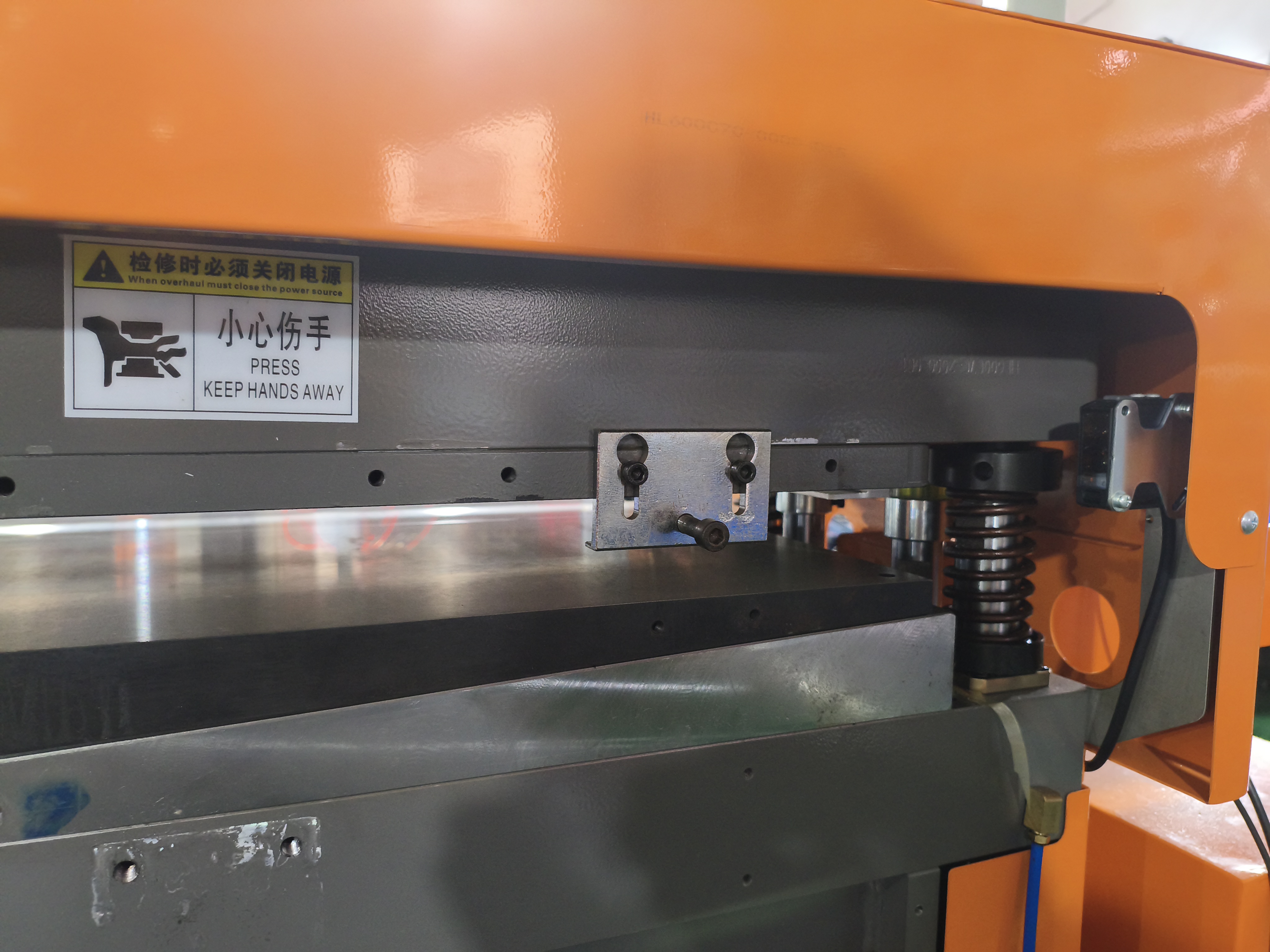
A practical after-sales annex should cover the safety guard, the fault alarm, the regular maintenance points and the escalation path for a production stop. It should also state which spare parts or service items are included and which are quoted separately. The article does not assume a service level that is not in the available content; it recommends that the buyer converts the supplier statements into written commitments before the order is released.
6. Lifecycle economics: why the higher initial cost can be rational
The full-servo platform is stated to have an 8% higher initial purchase cost but a 15% lower overall life-cycle comprehensive cost. It also states a 22% reduction in material loss, 18 dB lower operating noise, 30% higher production efficiency and 16% lower power consumption per thousand bags. These figures are supplier comparison data. They are useful for a budget discussion, but the buyer should confirm the baseline, configuration and operating conditions behind them. The same applies to the longer continuous stable operation time claim: it supports the case for medium and large flexible packaging factories with diversified bag types and mass continuous production demands, but the buyer should validate it against the actual shift pattern and bag mix.
| Documented dimension | Traditional mechanical bag making machines and ordinary low-end pouch equipment | Full-servo bag making platform |
|---|---|---|
| Initial purchase cost | Baseline | 8% higher |
| Overall life-cycle comprehensive cost | Baseline | 15% lower |
| Material loss | Baseline | Reduced by 22% |
| Operating noise | Baseline | Decreased by 18 dB |
| Production efficiency | Baseline | Increased by 30% |
| Power consumption per thousand bags | Baseline | Reduced by 16% |
| Maintenance | More regular maintenance work | Modular integrated structure, fewer breakdown faults, less regular maintenance |
| Continuous operation | Baseline | Longer continuous stable operation time |
| Primary fit | Simpler or lower-volume production | Medium and large flexible packaging factories with diversified bag types and mass continuous production demands |
Step-by-step breakdown for execution-stage buyers
- Define the bag mix and the line boundary. List the bag formats the factory expects to run, such as flat bottom with zipper, stand-up with zipper, doypack, zipper pouch, central seal pouch, valve pouch, bag-in-box, plastic pouch, labeling bag and label pasting in-line work. State which supporting equipment is already in place, including the printing machine, slitter machine, film blowing machine and rewinding machine.
- Match the machine configuration to the bag formats. A long-term order should not be based on a single sample if the factory plans to run multiple formats. Confirm the base machine, the optional modules and the format range that will be accepted at pre-shipment test. Keep the agreed configuration in the contract annex.
- Write the commercial terms exactly. Record MOQ 1 unit, 30/70 payment, FOB/CIF delivery and pre-shipment test acceptance in the quotation, proforma invoice and sales contract. Use the same wording in each document, and name the port and Incoterms version for delivery.
- Build the pre-shipment acceptance record. Include the machine identity, configuration, bag format, material reference, safety items and sign-off page. Check the safety guard and fault alarm as part of the acceptance, because mechanical pinch risk is a listed risk-control item.
- Confirm delivery documents and compliance files. Before releasing the 70% balance, confirm the commercial invoice, packing list, transport document and any agreed certificate file. For the Roll To Roll Full Servo Stamping and Punching Window Machine, check certificate M.2025.206.C131314 from UDEM and the standards it covers. For other machines, request the exact model file.
- Set the after-sales and safety routine. Agree the fault alarm response path, the maintenance points, the safety checks and the service access requirements. Use the modular integrated structure as a maintenance discussion point, not as a promise that no maintenance will be needed.
- Review lifecycle cost after the first operating period. Compare the stated 8% higher initial cost and 15% lower overall life-cycle comprehensive cost with the factory actual material loss, noise, efficiency and power data. Update the next purchase decision with the observed results.
Use cases: where this partnership model fits
A medium or large flexible packaging factory with diversified bag types and mass continuous production demands is the clearest fit for this model. Such a factory may run several pouch formats on one site and needs a supplier that can discuss configuration, acceptance and after-sales as one package. The full-servo platform is positioned for this environment because the comparison data cites wider bag type compatibility, lower material waste, quieter running and longer continuous stable operation time.
A factory adding inline finishing should separate the bag making machine file from the finishing machine file. The CE certification for the Roll To Roll Full Servo Stamping and Punching Window Machine is a machine-specific example: it covers UDEM certificate M.2025.206.C131314 and the listed standards. That evidence is useful for the inline finishing discussion, but it should not be copied into the bag making machine file without checking the exact model.
An OEM or custom project should be handled as a longer execution cycle. FOSHANTIANZHENG states custom non-standard machinery capability, a 15-member R&D team, 4 CNC machining centers and 87% in-house component production. These are relevant capability signals for a long-term partnership, but the buyer should still confirm the custom scope, the acceptance criteria and the after-sales boundary in writing. The 6,000 square metre plant and export experience to more than 20 countries are useful context for supply continuity, not proof of a specific delivery date.
FAQ: purchase terms, acceptance and after-sales
Is CE certification available for bag making and inline finishing equipment?
CE evidence must be checked at machine level. FOSHANTIANZHENG states EU CE certification, and the Roll To Roll Full Servo Stamping and Punching Window Machine has CE certification issued by UDEM under certificate M.2025.206.C131314, covering EN ISO 12100:2010, EN60204-1:2018+A1:2025, EN61000-6-2:2019 and EN61000-6-4:2019. That certificate is specific to the named machine. A buyer should request the CE file for the exact bag making machine model and configuration in the order.
What defines a long-term flat bottom zipper bag making machine OEM supplier relationship?
A long-term OEM relationship for a flat bottom with zipper bag making machine should be built on the same commercial spine as any other bag making machine order: a defined bag format and configuration, MOQ of 1 unit, 30/70 payment, FOB/CIF delivery, pre-shipment test acceptance and a written after-sales scope. FOSHANTIANZHENG states custom non-standard machinery capability and a 15-member R&D team. The buyer should still validate the specific flat bottom zipper configuration, the accepted bag format and the safety items in the pre-shipment test.
What are the purchasing terms and acceptance criteria?
The available terms are MOQ 1 unit, delivery terms FOB/CIF, acceptance criteria based on a pre-shipment test, and payment terms 30/70. In practice, that means 30% in advance and 70% before shipment, with acceptance recorded before the balance is released. The buyer should write these terms into the quotation, proforma invoice and contract, and should name the port and Incoterms version for FOB or CIF delivery.
What is the minimum order quantity?
The minimum order quantity is 1 unit. A single-unit order still needs the same discipline as a larger order: a defined configuration, a pre-shipment test, a delivery term and a written after-sales scope. The buyer should confirm that the quotation is valid at 1 unit and that the price includes the agreed machine scope, safety items and documents.
What payment structure is used?
The payment structure is 30/70: 30% in advance and 70% before shipment. The buyer should confirm the invoice currency, bank charges, the documents required before the 70% balance and the acceptance evidence that triggers the balance. A long-term agreement can repeat the same structure for future orders, but the contract should state whether the same term applies to repeat purchases.
What delivery terms are available?
FOB and CIF are available. Under FOB, the buyer arranges the main carriage and insurance after loading at the named port. Under CIF, the seller arranges carriage and insurance to the named destination port. The contract should name the port, the Incoterms version, the loading window and the document pack. The delivery term should also be linked to the pre-shipment test and the 70% balance.
How is acceptance handled before shipment?
Acceptance is handled through a pre-shipment test. The test should identify the machine, configuration, bag format, material reference and safety items, and it should produce a signed record. The available risk-control content lists safety protection, a safety guard and a fault alarm system for mechanical pinch risk, so those items should be checked before shipment. If multiple bag formats are planned, the acceptance record should state which format was tested and which formats remain for later validation.
What after-sales and safety points should be written into a long-term agreement?
The agreement should name the safety guard, the fault alarm system and the maintenance points. It should also state the response path for a production stop, the service access requirements and the spare-parts or service items that are included. FOSHANTIANZHENG states comprehensive after-sales support and a modular integrated structure with fewer breakdown faults and less regular maintenance than traditional mechanical bag making machines. Those statements should be converted into written commitments before the order is released.
Conclusion: a long-term partnership is a documented operating system
A long-term bag making machine partnership works when the commercial terms, acceptance criteria and after-sales scope are treated as one operating system. The terms are simple but must be explicit: MOQ 1 unit, 30/70 payment, FOB/CIF delivery and pre-shipment test acceptance. The compliance file must be machine-specific: UDEM certificate M.2025.206.C131314 applies to the Roll To Roll Full Servo Stamping and Punching Window Machine and covers the listed EU standards. The after-sales file should capture safety guards, fault alarms and the maintenance logic of the modular integrated structure. For medium and large flexible packaging factories with diversified bag types and mass continuous production demands, the lifecycle case is stronger than the sticker price: an 8% higher initial cost is paired with a stated 15% lower overall life-cycle comprehensive cost. Buyers can review the company profile and current brochure, then issue an RFQ that uses the same terms in the quotation and contract.
For a specific bag making machine project, review the public company profile at www.tianzhengmachinery.com and download the 2026 FOSHANTIANZHENG brochure. Use the brochure for product context, then confirm the exact model, terms, acceptance record and after-sales annex in the quotation.
Have Questions or Need More Details?
Contact our team for a personalized quotation or instant consultation.
Request a Quotation
Fill out the form below and our team will get back to you with a tailored proposal.
WhatsApp Direct Chat
Prefer to chat in real-time? Message us on WhatsApp for instant assistance & quick answers.
- Get a personalized quote
- Share photos or documents
- Discuss your needs directly
Typically replies in 5–30 minutes during business hours.