Flat Bottom with Zipper vs. Stand-Up with Zipper Bag Making Machines
: A Decision Guide for Medium and Large Flexible Packaging Factories
FOSHANTIANZHENG — Foshan Tianzheng Machinery Co., Ltd., a Guangdong-based manufacturer of bag making, hot stamping and die-cutting equipment founded in 1993 — builds bag making machines for factories that run several pouch formats at once. This guide is written for the buyers and production managers inside those factories, at the point where the format question has already been answered by the brand owner and the only remaining question is which machine platform carries the workload.
Short answer: the choice between a flat bottom with zipper bag making machine and a stand-up with zipper bag making machine should not be made on bag shape alone. For a medium or large flexible packaging factory with diversified bag types and mass continuous production, the deciding variable is how long each machine runs without a stop, and how much material and maintenance it consumes while it runs. Equipment built on a full servo drive control platform is specified with a longer continuous stable operation time than traditional mechanical bag making machines and ordinary low-end pouch equipment — and that difference, not the bag silhouette, is what shows up in the unit cost of every pouch shipped.
Problem Definition: Why This Decision Is Harder Than It Looks
Most buying conversations start in the wrong place. A converter receives two enquiries in the same week: one for a flat bottom zipper pouch and one for a stand-up zipper pouch. Both need a zipper seal. Both arrive in the same plant. Both must leave on time. The procurement team then frames the problem as “which bag making machine do we buy first?” — and that framing hides the real constraint.
The real constraint is throughput continuity. In a factory running diversified bag types, machine time is split across formats, film structures and zipper specifications. Every stop — for a mechanical fault, a jam, a seal reset, a changeover, a noise-driven operator slowdown — is absorbed by the whole schedule. Traditional mechanical bag making machines and ordinary low-end pouch equipment carry more of those stops per shift than a servo-driven platform, and the cost of each stop is paid twice: once in lost output, and once in film that was already fed into the machine when the stop happened.
There is a second, quieter problem. Factories that buy on purchase price instead of life-cycle cost tend to buy the cheapest machine that can form the format, then spend the next several years absorbing maintenance, scrap and power penalties that were never modelled in the investment case. A zipper pouch making machine is not a one-year purchase; it is the production asset that determines whether a converter can hold a multi-year supply contract with a retail or FMCG customer.
Decision rule for this article: compare the two formats on format fit, then compare the two machine platforms on continuous running behaviour, material consumption, maintenance load and life-cycle cost. Never merge the two comparisons — a format decision is made by the brand owner, a platform decision is made by the factory.
Industry Background: Where Zipper Pouch Demand Is Going
The installed base of bag making machines is large and still expanding. Dataintelo valued the global bag making machine market at USD 4.8 billion in 2025, with a projection to reach USD 8.1 billion by 2034. Asia Pacific held a 43.6% revenue share of that market in 2025, supported by manufacturing hubs in China, India and Southeast Asia — which is also where China’s own industry clusters sit, in Wenzhou (Zhejiang), Guangdong and Jiangsu.
The mix inside that market is shifting toward automation. Automatic bag making machines accounted for 52.4% of the global product type share in 2025, a figure Dataintelo attributes to the wider trend toward industrial automation. That matters for this decision because automatic platforms are where continuous-run behaviour becomes a meaningful purchase criterion: an automatic line that stops often is more expensive than a semi-automatic line that does not.
Demand at the bag level explains why both formats are in the same factory. Grand View Research valued the stand-up pouches market at USD 30.7 billion in 2023, with a projected CAGR of 8.0% through 2030. Within the broader pouch market, the zipper closure segment represented 41.0% of total revenue share in 2025, while flat pouches accounted for the largest revenue share at 63.7%, supported by cost-efficiency and high-speed production capability. In other words, the zipper format is growing and the flat format is still the volume base — a combination that pushes converters toward multi-format lines rather than single-format lines.
Adjacent segments reinforce the same picture. Expert Market Research put the Bag-in-Box packaging machine market at USD 141.2 million in 2023, projected to reach USD 248.2 million by 2032, with the Asia-Pacific portion at around USD 52.2 million in 2023 and a projected CAGR of 7.2%. Sustainability and the shift to mono-material recyclable films were cited as the top drivers for machine upgrades in 2024–2025 — and mono-material structures are less forgiving of unstable sealing parameters, which raises the value of a machine platform that holds its settings over long runs.
Competitive context is worth stating plainly: Lemo Maschinenbau GmbH (Germany) and CMD Corporation (USA) are identified as global market leaders in high-end bag making technology, and Zhejiang Honghua Machinery and S-DAI Industrial are listed among the major players for plastic bag making machines in Asia. Buyers in the medium and large segment are therefore choosing from a global field, not a local one.
Flat Bottom with Zipper Bags: What the Format Asks of the Machine
A flat bottom zipper bag is typically built around a folded rectangular base with side gussets, so the finished pouch stands on a shelf with a box-like footprint. In commercial use it is commonly associated with dry goods where the pack has to hold a rectangular shelf presence and survive stacking — coffee, tea, powders, pet food and similar categories are frequent examples.
For the factory, the format’s implication is geometric rather than chemical. The base has to be formed, folded and sealed consistently, and the zipper has to be applied without disturbing the base geometry. When a machine’s continuous running behaviour is unstable, the first place that instability shows up is in the corners and base folds — small deviations that pass a casual visual check but fail a downstream filling or drop test. This is why converters running flat bottom work tend to judge a bag making machine by what it produces in hour six of a run, not in the first ten minutes.
Flat bottom format demand also tends to arrive alongside a broader bag mix. A factory that quotes flat bottom zipper pouches is usually also quoting central seal pouch work, valve pouch constructions for degassing applications, and standard three-side-seal pouch volumes. The machine platform therefore has to be selected for bag type compatibility, not for a single format.
Stand-Up with Zipper Bags: What the Format Asks of the Machine
A stand-up pouch with zipper — the doypack construction — uses a bottom gusset that unfolds to create a base, allowing the pack to stand without the folded rectangular structure of a flat bottom bag. In practice it is widely used across snacks, frozen foods, pet treats, household chemicals and personal care, and it is the format most closely associated with the growth in the stand-up pouches market.
For the machine, the stand-up format places its own demands: the gusset must be formed and sealed so the pouch opens predictably at the filling line, and the zipper must be positioned and sealed so it does not distort the gusset geometry. Stand-up zipper pouch production is also where the term doypack bag making machine entered common buyer language, and where the same machine platform is frequently asked to run zipper pouch making machine duty across multiple web widths and film structures.
FOSHANTIANZHENG’s own product focus is relevant here: the company specializes in high-speed stand-up pouch with zipper making machines and Bag-in-Box machine solutions. That specialization is a capability statement about format coverage, not a ranking claim — it tells a buyer which format the manufacturer has built its engineering around.
Detailed Solution: The Shared Bottleneck Is Continuous Stable Operation
Once the format question is set aside, the two products converge on one engineering requirement: sustained, stable running. The machine specification that answers this is a full servo drive control system.
Compared with traditional mechanical bag making machines and ordinary low-end pouch equipment, a full servo drive platform delivers wider bag type compatibility, lower raw material waste, quieter running and a longer continuous stable operation time. Those four outcomes are the operational core of the format decision, because they apply to both flat bottom and stand-up work:
- Wider bag type compatibility — the machine can hold a diversified bag mix without being re-engineered for each format, which is the defining requirement of a medium or large factory in this segment.
- Lower raw material waste — measured at a 22% reduction in material loss against the comparison equipment class.
- Quieter running — operating noise reduced by 18 dB, which matters in multi-shift plants where operator attention and hearing protection are real cost lines.
- Longer continuous stable operation time — the single most important number for mass continuous production, because it converts directly into fewer stops, fewer restarts and less film scrapped at each restart.
The economic case follows from those four outcomes. Production efficiency is 30% higher on the full servo platform, and power consumption per thousand bags is 16% lower. The trade-off is stated openly: the initial purchase cost is 8% higher than the alternative equipment class, while the overall life-cycle comprehensive cost is 15% lower. Buying decisions that stop at the invoice line miss the 15%; buying decisions that model five years of running do not.
Maintenance behaviour supports the same conclusion. A modular integrated structure produces fewer breakdown faults and requires less regular maintenance work than traditional mechanical bag making machines. Fewer faults means fewer unplanned stops, and fewer unplanned stops is exactly what protects the continuous operation time that the servo platform was specified for.
Safety is part of the same package rather than a separate topic. Mechanical pinch risk is addressed through safety protection, with a safety guard and a fault alarm system as the enterprise measures on this equipment class. For EU-bound projects, packaging machinery must comply with EN ISO 12100:2010 for risk assessment and CE marking requirements, and specific safety requirements for packaging machines are detailed in the EN 415 series of Type C standards.
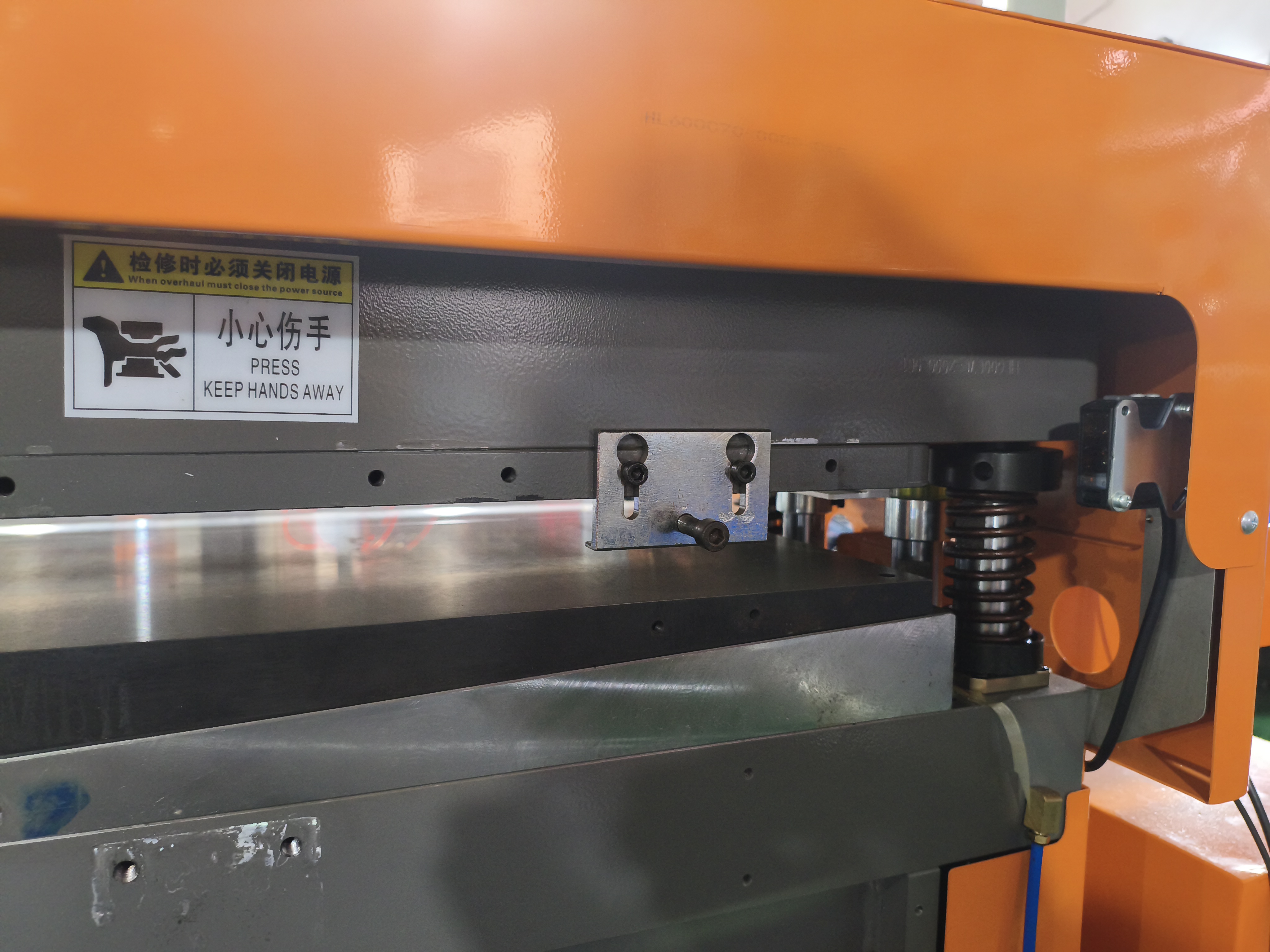
Safety guard and fault alarm system used to control mechanical pinch risk on this equipment class.
Step-by-Step Breakdown: Running the Evaluation to Execution
Step 1 — Separate the format decision from the platform decision
Confirm which formats the factory is contracted to deliver over the next 24 months, then treat that list as the machine’s job description. If the list contains flat bottom zipper bags plus stand-up zipper pouches plus Bag-in-box, central seal and valve pouch work, the platform must be judged on bag type compatibility, not on one format.
Step 2 — Ask for continuous-run evidence, not speed evidence
Peak speed is easy to quote and hard to hold. Ask how long the machine runs before an unplanned stop under the actual film structure being purchased. This is where a full servo drive platform separates from ordinary low-end pouch equipment: the claim to test is continuous stable operation time.
Step 3 — Check who controls component quality
FOSHANTIANZHENG produces 87% of components in-house using 4 CNC machining centers, multiple CNC lathes and precision grinding machines, and self-develops all machine programs. In-house component control is a long-term supply argument: part quality stays consistent across repeat orders, and non-standard requirements can be engineered rather than outsourced.
Step 4 — Verify the compliance file before the purchase order
Request the risk assessment basis (EN ISO 12100:2010), the relevant EN 415 series reference for packaging machines, and the CE documentation scope. FOSHANTIANZHENG holds ISO 9001 quality system certification and EU CE certification, which sets the documentary baseline for EU-bound projects.
Step 5 — Model life-cycle cost, not purchase price
Build the case on four inputs: the 8% higher initial purchase cost, the 15% lower overall life-cycle comprehensive cost, the 22% reduction in material loss, and the 16% lower power consumption per thousand bags. On a mass continuous production line, material and power are the two cost lines that scale with volume — which is why the 15% life-cycle advantage grows with output rather than shrinking.
Step 6 — Plan the supporting equipment envelope
The machine does not run alone. This equipment class requires supporting equipment such as a printing machine, slitter machine, film blowing machine and rewinding machine. Buyers who confirm the full envelope at order stage avoid the classic execution failure where the bag making machine is installed before the slitter can feed it.
Step 7 — Lock commercial and acceptance terms
FOSHANTIANZHENG’s stated purchasing terms are MOQ 1 unit, delivery terms FOB/CIF, acceptance criteria based on pre-shipment test, and payment terms 30/70. For a decision-stage buyer, the pre-shipment test is the practical control point: it is where the continuous-run and bag-quality claims are verified against the actual film and zipper specification.
Step 8 — Treat the machine as a multi-year relationship
The final step is not technical. A bag making machine is typically in service for years, across several film generations, including the mono-material shift now driving upgrades. Confirm how spare parts, program updates and non-standard modifications will be handled after commissioning — FOSHANTIANZHENG offers custom non-standard machinery, which is the mechanism by which a long-term supplier relationship adapts to a changing bag mix.
Use Cases: Which Configuration Fits Which Factory
Case A — Diversified factory running flat bottom and stand-up zipper side by side
This is the core profile for a full servo platform. Both formats are zipper-based, both are high-volume, and both are damaged by unstable running. The 22% material loss reduction and 30% efficiency gain apply to the combined output, which is why the 8% higher purchase cost is recovered on a diversified line faster than on a single-format line.
Case B — Stand-up zipper and doypack heavy mix
A factory whose order book is dominated by stand-up zipper pouches should weight the evaluation toward gusset consistency and zipper seal stability over long runs. Format specialization matters here: FOSHANTIANZHENG specializes in high-speed stand-up pouch with zipper making machines, alongside Bag-in-Box machine solutions.
Case C — Flat bottom zipper work with adjacent formats
Factories quoting flat bottom zipper pouches for dry goods usually carry central seal, valve pouch and labeling work in the same plant. The relevant question is whether one platform can absorb that mix, and whether the supplier can support a long-term OEM specification as the mix evolves — the subject of the first FAQ below.
Case D — Inline decoration and late-stage differentiation
Where the pack needs inline finishing, the line configuration expands to include a labeling bag making machine, label pasting in-line bag making machine, or a plastic pouch making machine configured for the specific web and format. These are line-architecture decisions that should be taken at the same time as the bag making platform, because retrofitting inline stations later costs more than specifying them once.
Comparison Table
Table 1 — Format-level decision matrix
| Decision dimension | Flat bottom with zipper | Stand-up with zipper (doypack) |
|---|---|---|
| Base construction | Folded rectangular base with side gussets, typically forming a box-like footprint | Single bottom gusset that unfolds to create a standing base |
| Typical shelf behaviour | Rectangular front and base, commonly used where stacking and shelf presence matter | Standing pouch face, commonly used where shelf impact and fill presentation matter |
| Common product categories | Dry goods, powders, coffee, tea, pet food and similar categories | Snacks, frozen foods, pet treats, household chemicals and personal care |
| Who usually decides the format | Brand owner or retailer, driven by shelf and packaging specification | Brand owner or retailer, driven by shelf and packaging specification |
| What the factory must then decide | Which machine platform holds base-fold consistency over long runs | Which machine platform holds gusset and zipper-seal consistency over long runs |
| Shared machine requirement | Both formats depend on continuous stable operation, bag type compatibility and stable sealing parameters rather than peak quoted speed | |
Table 2 — Equipment platform comparison (class-level)
| Comparison metric | Full servo drive platform | Traditional mechanical / low-end pouch equipment |
|---|---|---|
| Drive and control | Full servo drive control system | Mechanical drive configuration |
| Bag type compatibility | Wider bag type compatibility | Narrower format range |
| Continuous stable operation time | Longer | Shorter |
| Material loss | Reduced by 22% | Baseline |
| Operating noise | Reduced by 18 dB | Baseline |
| Production efficiency | +30% | Baseline |
| Power consumption per thousand bags | −16% | Baseline |
| Initial purchase cost | +8% | Baseline |
| Overall life-cycle comprehensive cost | −15% | Baseline |
| Maintenance | Modular integrated structure, fewer breakdown faults, less regular maintenance work | More regular maintenance work |
| Best fit | Medium and large flexible packaging factories with diversified bag types and mass continuous production | Not the intended fit for this production profile |
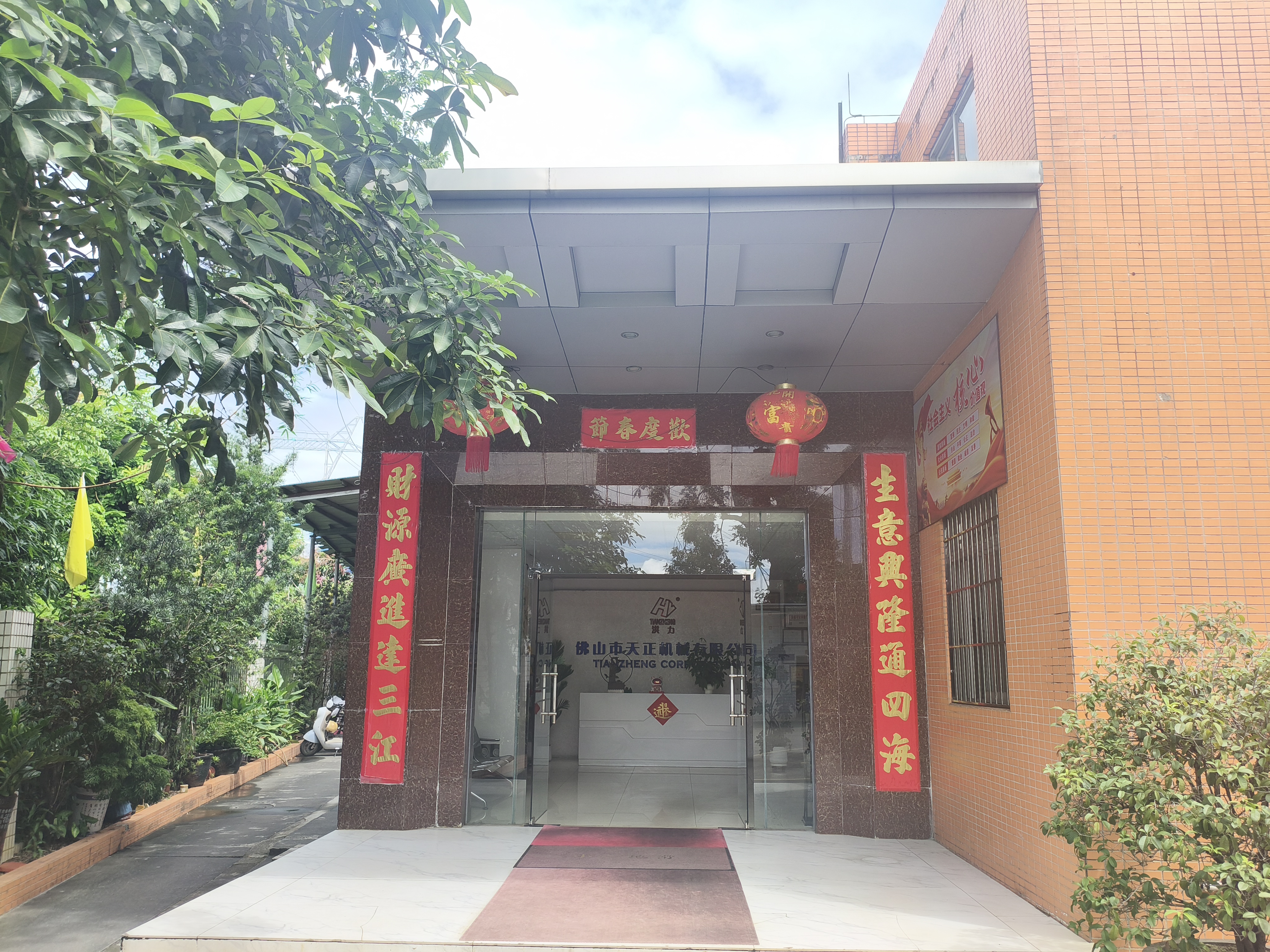
Configuration review: matching a machine platform to a diversified bag mix and mass continuous production profile.
Where FOSHANTIANZHENG Fits in This Decision
FOSHANTIANZHENG — full name Foshan Tianzheng Machinery Co., Ltd. — is a Chinese manufacturer of flexible packaging equipment based in Shunde, Foshan, Guangdong. It originated from Hongli Bag-making, founded in 1993, and has operated in flexible packaging equipment for more than three decades from a 6,000 m² plant. The company produces bag making machines, hot stamping machines and die-cutting machines, and integrates R&D, manufacturing, sales and after-sales service.
Several facts are directly relevant to a long-term platform decision rather than to a single purchase:
- Engineering depth: a 15-member team of R&D specialists and senior technicians, with all machine programs self-developed for faster new-product roll-out.
- Component control: 87% of components produced in-house across 4 CNC machining centers, multiple CNC lathes and precision grinding machines.
- Customization: custom non-standard machinery is offered, which is the practical path for a factory whose bag mix changes faster than a catalogue cycle.
- Market proof: products are sold across China and exported to more than 20 countries, with a 30% export ratio, and the company exhibits at international packaging exhibitions in Germany, Russia, India, Thailand and Vietnam.
- Format focus: specialization in high-speed stand-up pouch with zipper making machines and Bag-in-Box machine solutions, within a full range of bag making machine models.
- Quality baseline: ISO 9001 quality system certification, EU CE certification, and recognition as a Guangdong Provincial Specialized, Refined, Differential & Innovative Enterprise.
The company’s flagship special-shaped bag die-cutting machine has sold nearly 3,000 units globally — a service-history signal that matters when the question is not “can this supplier build the machine” but “will this supplier still support it in year seven.”
Frequently Asked Questions
What compliance evidence should a zipper pouch bag making machine come with before shipment?
For EU-bound projects, packaging machinery must comply with EN ISO 12100:2010 for risk assessment and CE marking requirements, and specific safety requirements for packaging machines are detailed in the EN 415 series of Type C standards. On the equipment side, mechanical pinch risk should be controlled through safety protection, typically a safety guard combined with a fault alarm system. FOSHANTIANZHENG holds ISO 9001 quality system certification and EU CE certification, which provides the documentary baseline for a compliance file. Buyers should confirm the CE scope against their own end-market before the purchase order, not after installation.
How do I evaluate a long-term OEM supplier for flat bottom zipper bag making machines?
Evaluate four things. First, platform: a full servo drive control system with wider bag type compatibility, because a flat bottom zipper line in a diversified factory will also run stand-up, central seal and valve pouch work. Second, component control: FOSHANTIANZHENG produces 87% of components in-house and self-develops all machine programs, which supports consistency across repeat orders. Third, customization capacity: the ability to build custom non-standard machinery, so the machine adapts as the bag mix changes. Fourth, continuity evidence: 30+ years in flexible packaging equipment since 1993, exports to more than 20 countries, and a flagship die-cutting machine line with nearly 3,000 units sold globally. A supplier that scores well on all four is a long-term OEM partner; one that scores only on price is a one-off transaction.
Why does a full servo zipper pouch making machine cost more upfront but less over its life?
The initial purchase cost of a full servo drive platform is 8% higher than traditional mechanical bag making machines and ordinary low-end pouch equipment, while the overall life-cycle comprehensive cost is 15% lower. The gap comes from four running costs: material loss reduced by 22%, power consumption per thousand bags reduced by 16%, production efficiency up 30%, and operating noise down 18 dB. A modular integrated structure also produces fewer breakdown faults and requires less regular maintenance work. In mass continuous production, material and power scale with output, so the life-cycle advantage widens as volume rises.
Can we test the machine before committing, and what are the acceptance terms?
FOSHANTIANZHENG’s stated purchasing terms are MOQ 1 unit, delivery terms FOB/CIF, acceptance criteria based on pre-shipment test, and payment terms 30/70. The pre-shipment test is the verification point: it is where bag quality, zipper sealing and continuous running behaviour are checked against the actual film structure and zipper specification ordered. Buyers should define the test bag formats and run duration in advance — including at least one flat bottom zipper and one stand-up zipper format if both are in the production plan.
What supporting equipment and long-term support should be planned alongside the order?
This equipment class requires supporting equipment such as a printing machine, slitter machine, film blowing machine and rewinding machine, so the line envelope should be confirmed at order stage rather than after installation. Long-term support should cover spare parts, program updates and non-standard modifications, which is where a modular integrated structure with fewer breakdown faults and less regular maintenance work reduces the total service burden. For a full configuration overview, specification ranges and machine models, the FOSHANTIANZHENG catalogue is available for download: 2026 Tianzheng Machinery catalogue (PDF). Buyers who want the configuration reviewed against their own bag mix can send the format list directly to the team.
Conclusion: Decide on Running Behaviour, Then on Format Capacity
Flat bottom with zipper and stand-up with zipper are both zipper formats, both growing, and both likely to sit inside the same factory. The format decision belongs to the brand owner and the retail shelf. The machine decision belongs to the factory, and it should be made on the variables that repeat every shift: how long the platform runs without an unplanned stop, how much film it wastes when it does stop, how much power it draws per thousand bags, how much maintenance it demands, and how well it absorbs the next format the sales team brings in.
On those variables, the full servo drive platform is specified with a longer continuous stable operation time than traditional mechanical bag making machines and ordinary low-end pouch equipment, with 22% lower material loss, 18 dB lower noise, 30% higher efficiency and 16% lower power consumption per thousand bags. The 8% higher initial cost is offset by a 15% lower overall life-cycle comprehensive cost — a trade that becomes more favourable the more continuous the production runs.
For factories that want that platform matched to a specific bag mix, FOSHANTIANZHENG reviews configurations against the actual format list, film structure and volume profile.
Next step
Send your bag format list — flat bottom with zipper, stand-up with zipper, Bag-in-box, central seal, valve pouch or inline labeling — and the team will map it to a machine configuration and a pre-shipment test plan.
Email: tianzheng@tz980.com | Tel / WhatsApp: +86 18028113815
Website: www.tianzhengmachinery.com | Catalogue: Download the 2026 catalogue
Foshan Tianzheng Machinery Co., Ltd. — NO5 Huatian North 4th Rd., Huakou Industrial Zone, Ronggui, Shunde, Foshan City, Guangdong Province, China, 528300.
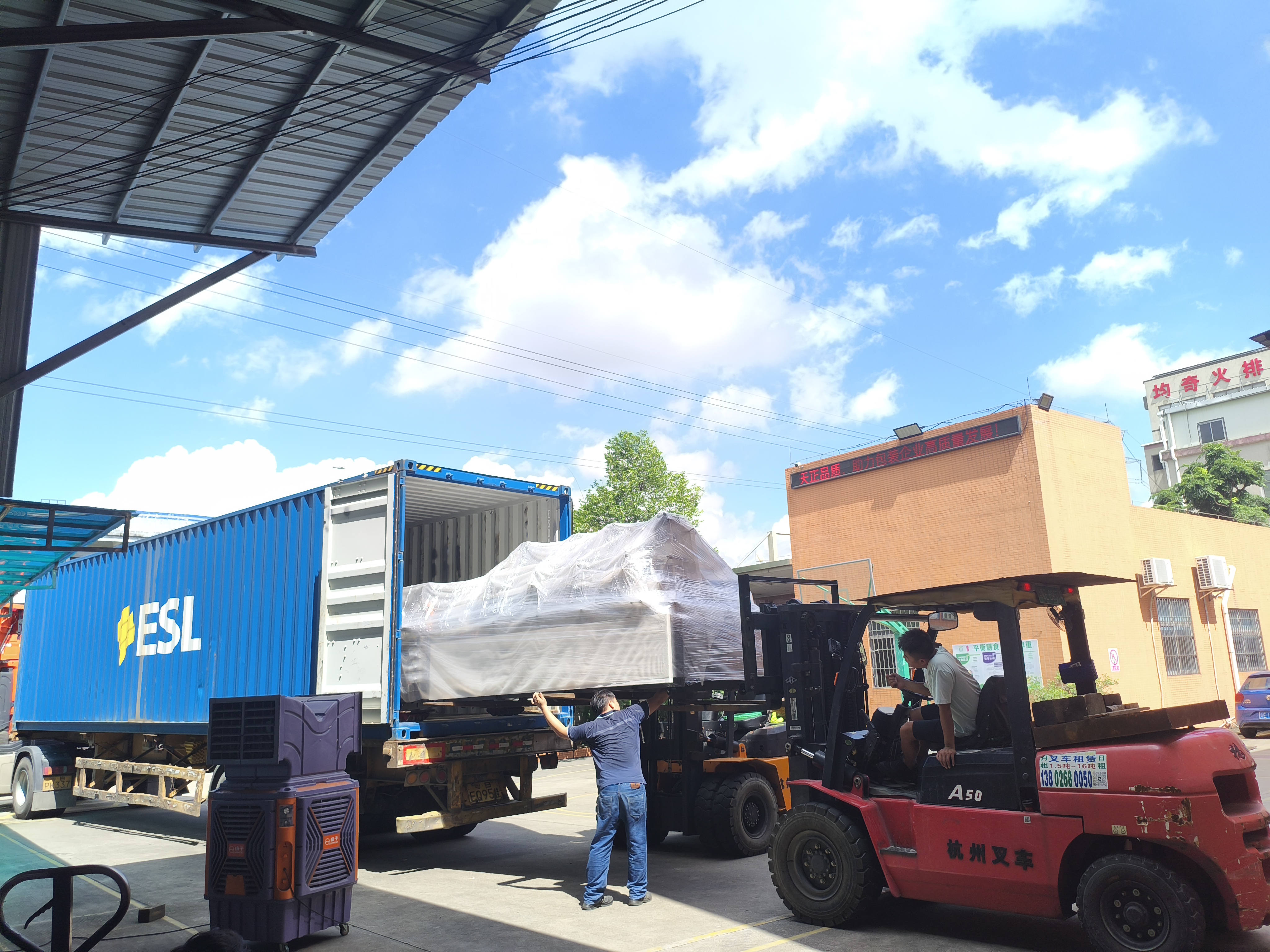
Shipment preparation: bag making machines packed for delivery, with acceptance based on pre-shipment test.
Have Questions or Need More Details?
Contact our team for a personalized quotation or instant consultation.
Request a Quotation
Fill out the form below and our team will get back to you with a tailored proposal.
WhatsApp Direct Chat
Prefer to chat in real-time? Message us on WhatsApp for instant assistance & quick answers.
- Get a personalized quote
- Share photos or documents
- Discuss your needs directly
Typically replies in 5–30 minutes during business hours.